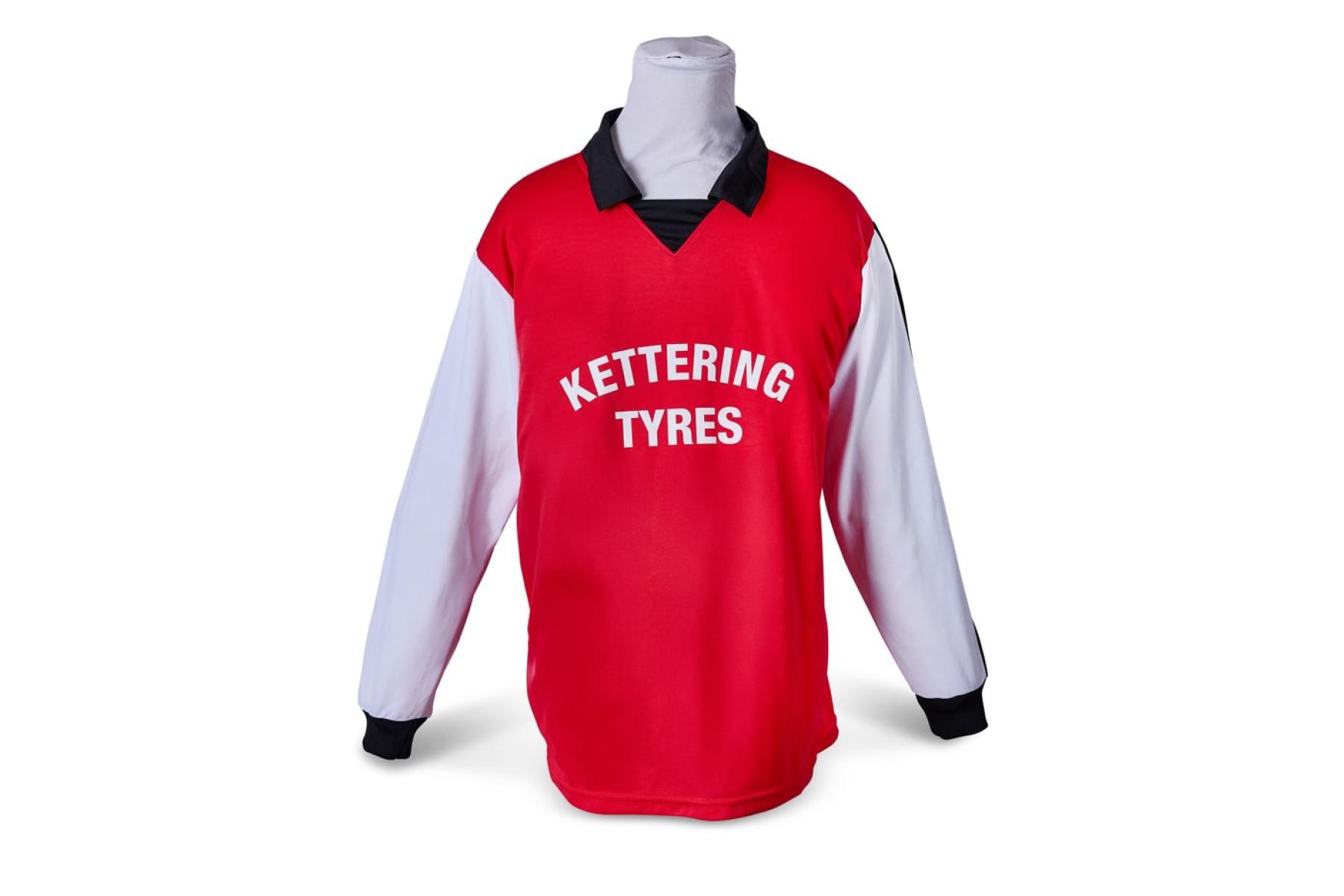
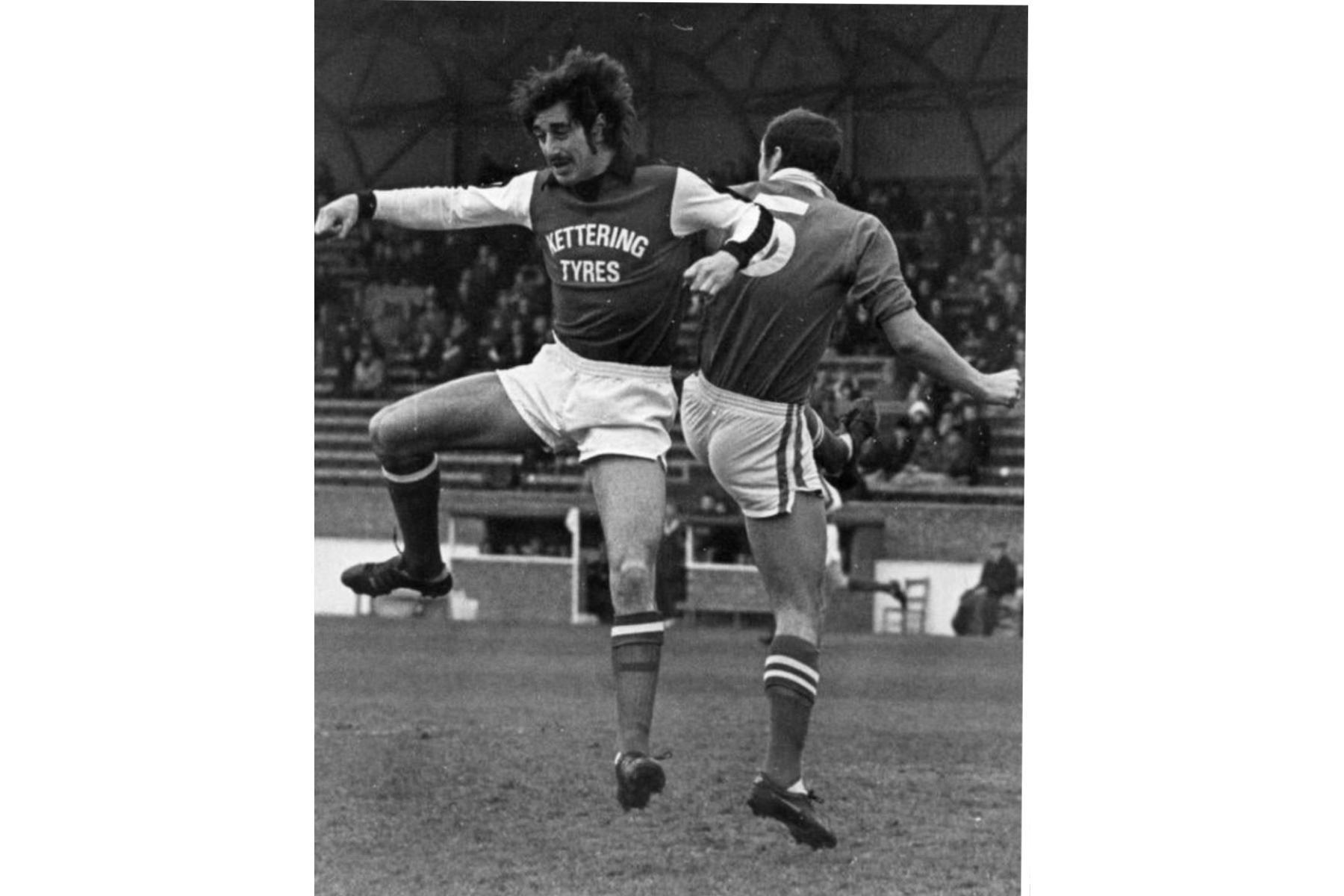
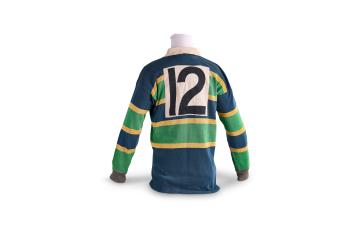
Kettering Town Football Player wearing sponsorship shirt
On 24 January 1976 Kettering Town Football Club became the first British club in history to play with a sponsor's name on its shirts, donning the Kettering Tyres logo.
This shirt is a replica of that groundbreaking article. The Football Association (FA) immediately warned that it would punish the club for wearing the sponsored shirt – and, at one point, the wording was changed to ‘Kettering T’. Faced with the prospect of being fined, the club backed down and no action was taken. In June 1977 the FA’s ban was lifted.
Kettering’s revolutionary initiative – which resulted in payment of £2,500 at that time - paved the way for shirt sponsorship, now commonplace and highly lucrative for clubs at all levels. Current deals with Premiership teams such as Manchester City, Liverpool, Arsenal and Manchester United are worth over £50 million per annum.
At the 40th anniversary of Kettering’s initiative, the then Chief Executive Officer of the Northamptonshire Football Association said: ‘It’s fantastic to be able to credit such a momentous event in the history of football in the UK to a club in Northamptonshire’.
Number 93 of the objects selected for the A History of Northamptonshire in 100 Objects exhibition 2025.
Won at Wembley in June 2020 in a final played behind closed doors due to Covid restrictions, Northampton Town Football Club took the trophy around Northampton visiting people as part of a project to support those who were suffering loneliness or were isolating during the Covid 19 pandemic.
 © NMAG
 © Wikimedia Commons (public domain)
 ©
NMAG
©
NMAG
 ©
Pete Norton
©
Pete Norton
 ©
Victoria and Albert Museum
©
Victoria and Albert Museum
 ©
NMAG
©
NMAG