Anglo-Saxon 895 CE-915 CE
Roman and Early Medieval
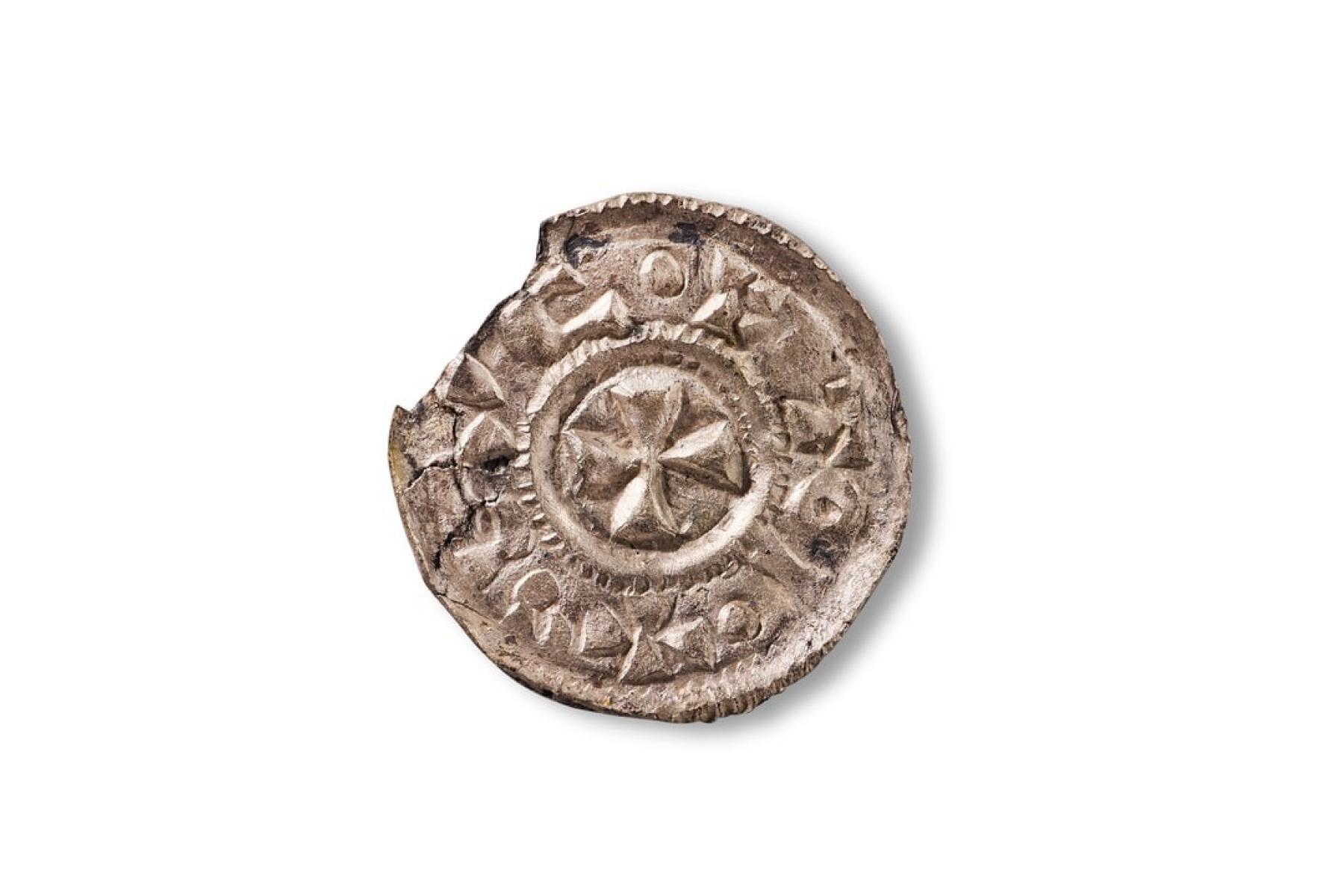
There is limited evidence of Viking influence in Northamptonshire and despite being minted during Viking rule this silver coin from Northampton depicts an Anglo-Saxon king.
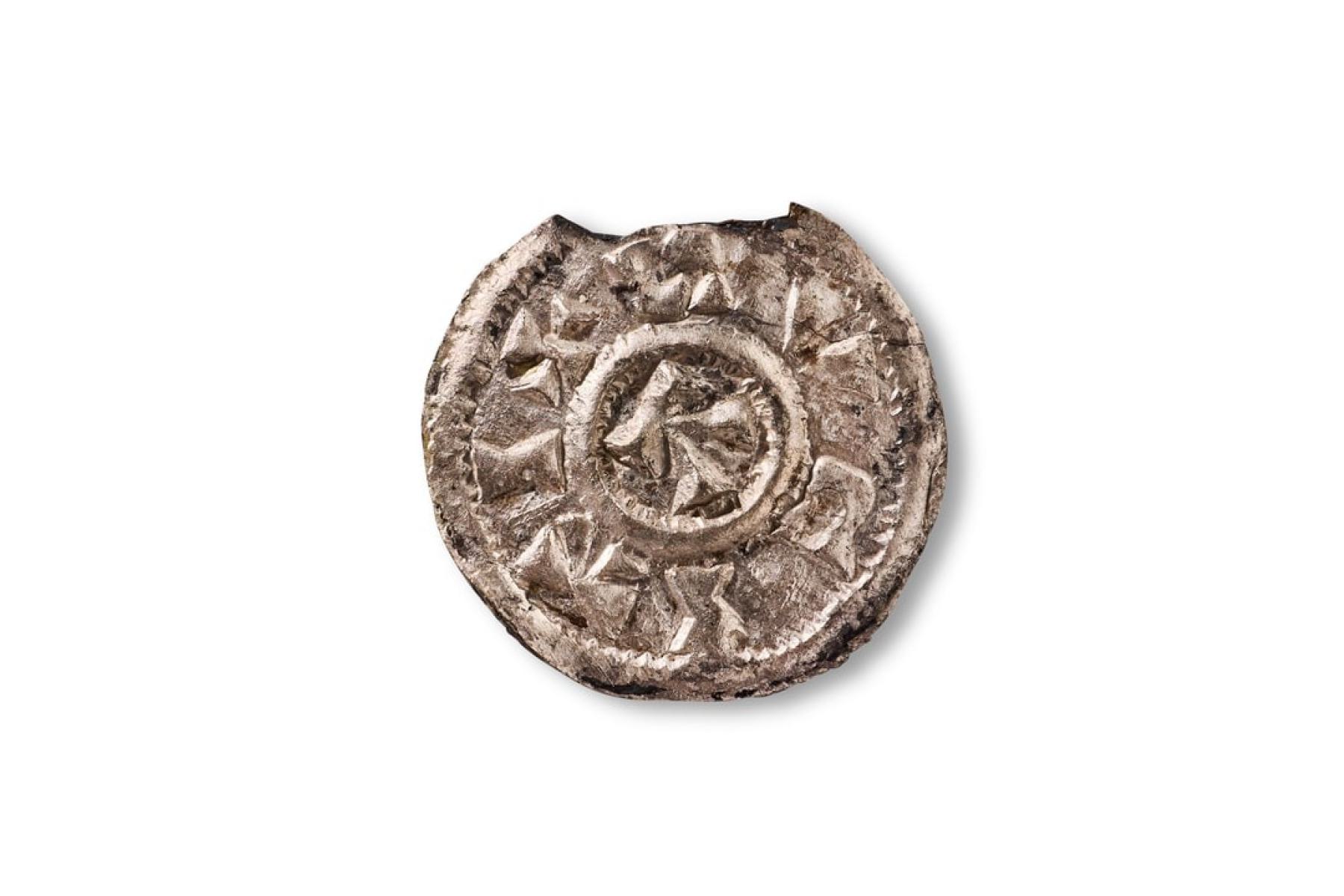
Reverse of Viking silver penny found in Northampton and dating to the period of Viking control of the town.
Prior to the conquest of Mercia (the Midlands) by the Vikings in 874, Edmund the Martyr was King of the East Angles from 855 CE until his death in 869 CE. Little is known about his life, but after his death a popular cult developed, and he was regarded as one of the patron saints of medieval England. This coin bearing his name was made between 895 and 915 when Northampton was under Viking rule, known as Danelaw. Northampton was a place of unrest in the late ninth and early tenth century, being situated just north of Watling Street which divided Danelaw to the north and the kingdom of Wessex to the south.
It is not clear where this penny was minted as these coins were economically significant, frequently made, and used for at least two decades throughout Danelaw. It was very unusual to replace the ruler’s name with that of a saint, but it is unlikely that all of these coins were minted at Bury St Edmunds, or another place associated with his pilgrimage. It is possible that the local Danish king endorsed the popularity of the cult of St Edmund by adding his name to his coins to appease his Christian citizens.
Number 33 of the objects selected for the A History of Northamptonshire in 100 Objects exhibition 2025.
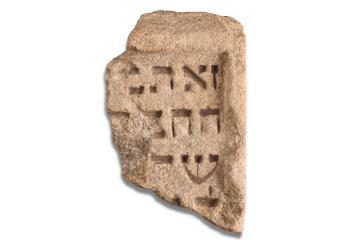
This Jewish tombstone fragment is one of two surviving medieval inscriptions in England; indicating a thriving medieval Jewish community living in Northampton at the time.

 © NMAG
 © NMAG
 ©
NMAG
©
NMAG
 ©
NMAG
©
NMAG
 ©
The Trustees of the British Museum
©
The Trustees of the British Museum