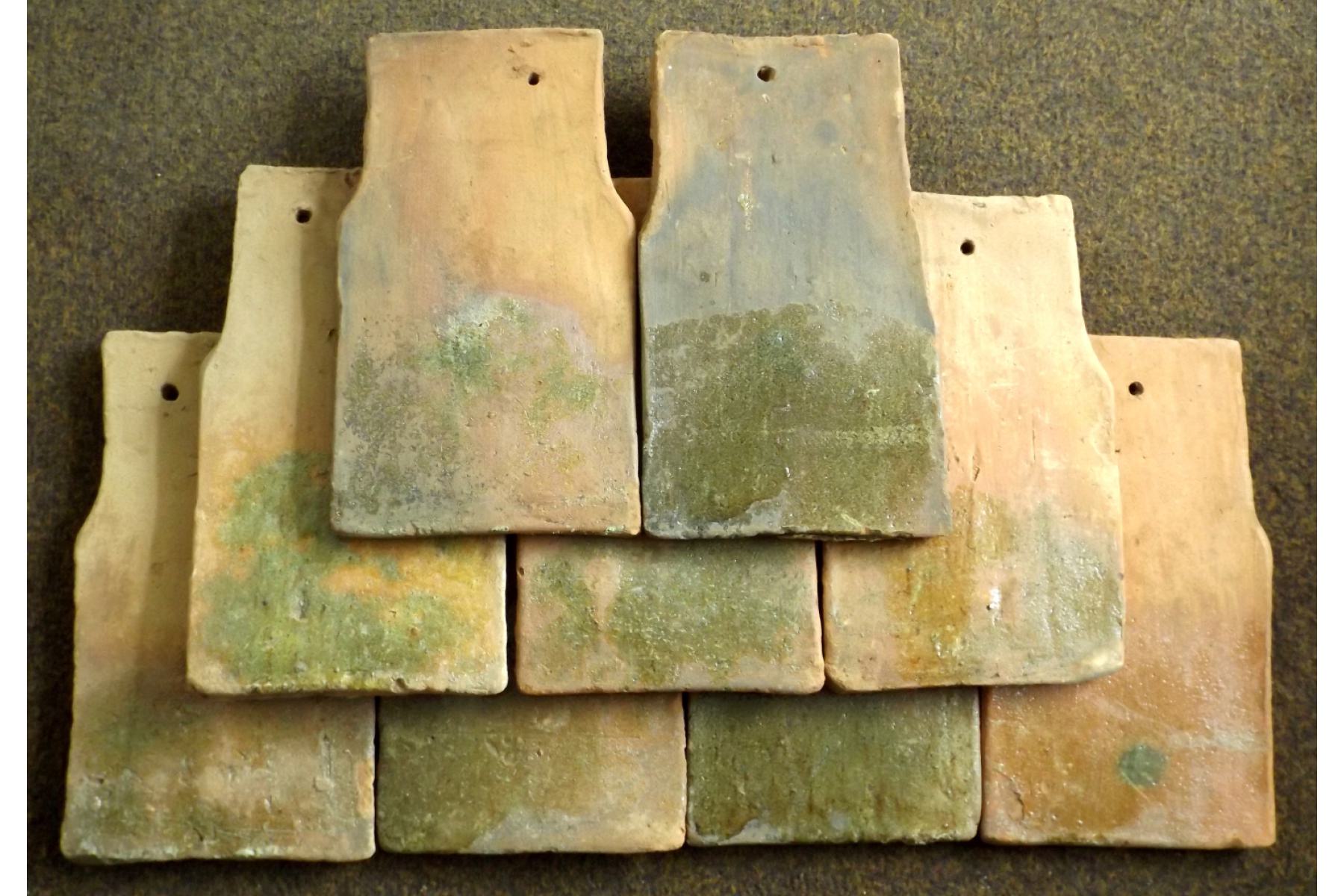
Glazed ceramic shouldered roof tile from St. James' Abbey, Northampton
1200
Medieval to Tudor
This is a rare type of medieval ceramic roof tile, replaced in the 13th century by standard rectangular ceramic or nib tiles used until the 20th century. The rarity of these roof tiles and their association with buildings of high status in Northampton, both religious and secular, is of historical and archaeological significance.
Roof tiles from excavations at St. James Abbey, Northampton
Glazed shouldered roof tiles were discovered lining graves during the excavation of the cemetery of St James’ Abbey by Northamptonshire Archaeology at the Express Lift site in Northampton in 2000. They had been removed from the roofs of the abbey buildings and stored, subsequently reused in the graves.
In 2014 similar fragments of shouldered tiles were recovered from the excavations in Angel Street opposite the Hospital of St John by MOLA Northampton, indicating the presence of a high status building in this area of medieval Northampton.
Building materials are rarely noticed, but they are every day materials without which we would have nowhere to live.
These tiles provide a glimpse into one short-lived but very important evolution in the history of the ceramic roof tile in England – with the visual aspect of medieval roofs with glazed ceramic tiles glittering in the sun.
Chosen for the Beyond the 100 exhibition the tiles are on display at St. Peters Church, Marefair, Northampton until March 2026.
Northampton
Contributed by Pat Chapman, Northamptonshire Archaeolgical Society
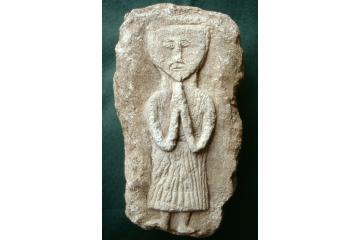
This unique limestone figure, carved in deep relief, shows a man in a long belted robe with hands held in prayer. Among thousands of Medieval objects excavated from the Deserted Medieval Hamlet of West Cotton, Raunds (1985–89), this one stood out and was affectionately nicknamed ‘Norman Morris’ by the archaeological team.

 © Andy Chapman
 ©
NMAG
©
NMAG
 ©
NMAG
©
NMAG
 ©
NMAG
©
NMAG
 ©
Andy Chapman
©
Andy Chapman