“Norman Morris” - Carved Stone figure from West Cotton,
Mid-13th century
Medieval to Tudor
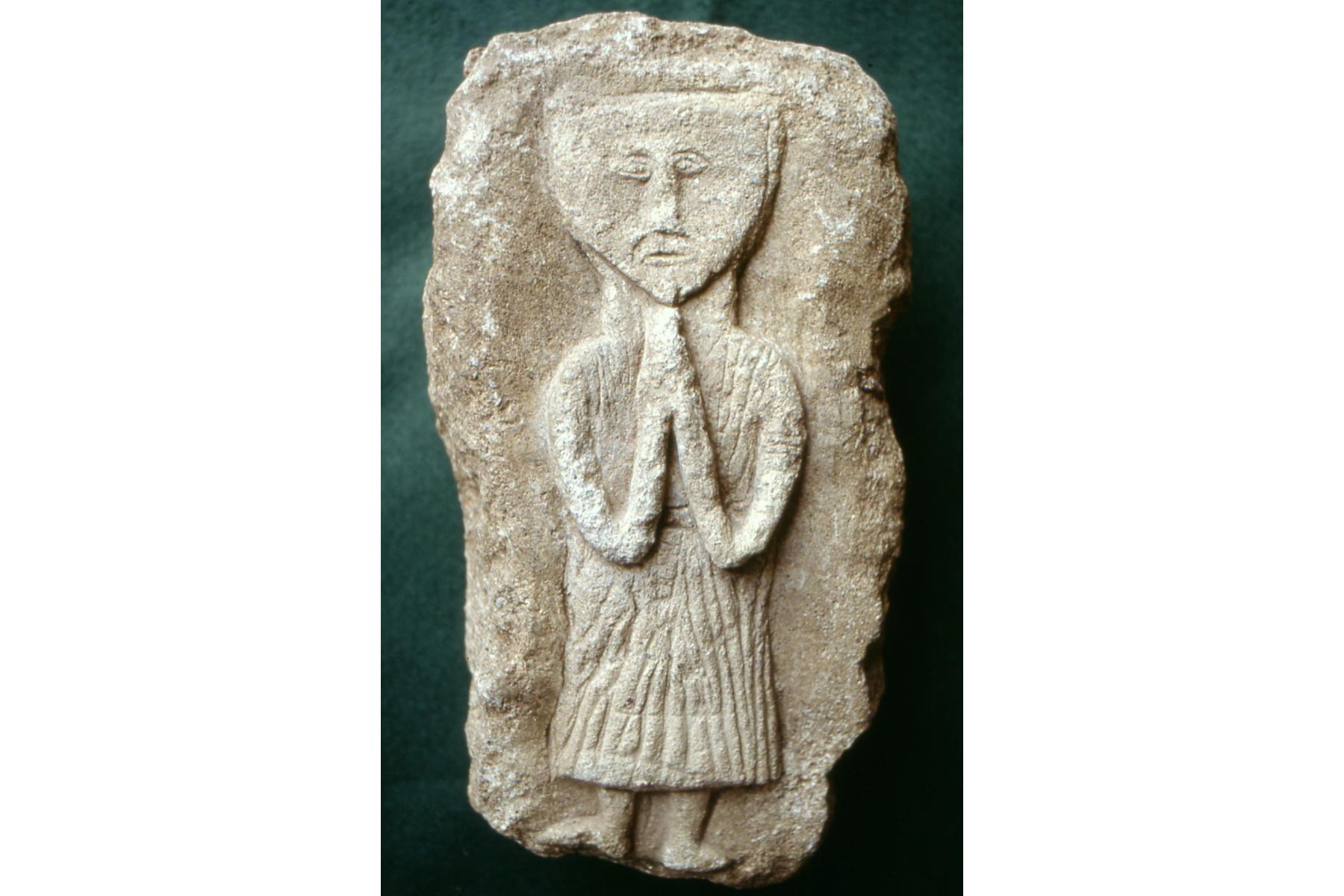
This unique limestone figure, carved in deep relief, shows a man in a long belted robe with hands held in prayer. Among thousands of Medieval objects excavated from the Deserted Medieval Hamlet of West Cotton, Raunds (1985–89), this one stood out and was affectionately nicknamed ‘Norman Morris’ by the archaeological team.
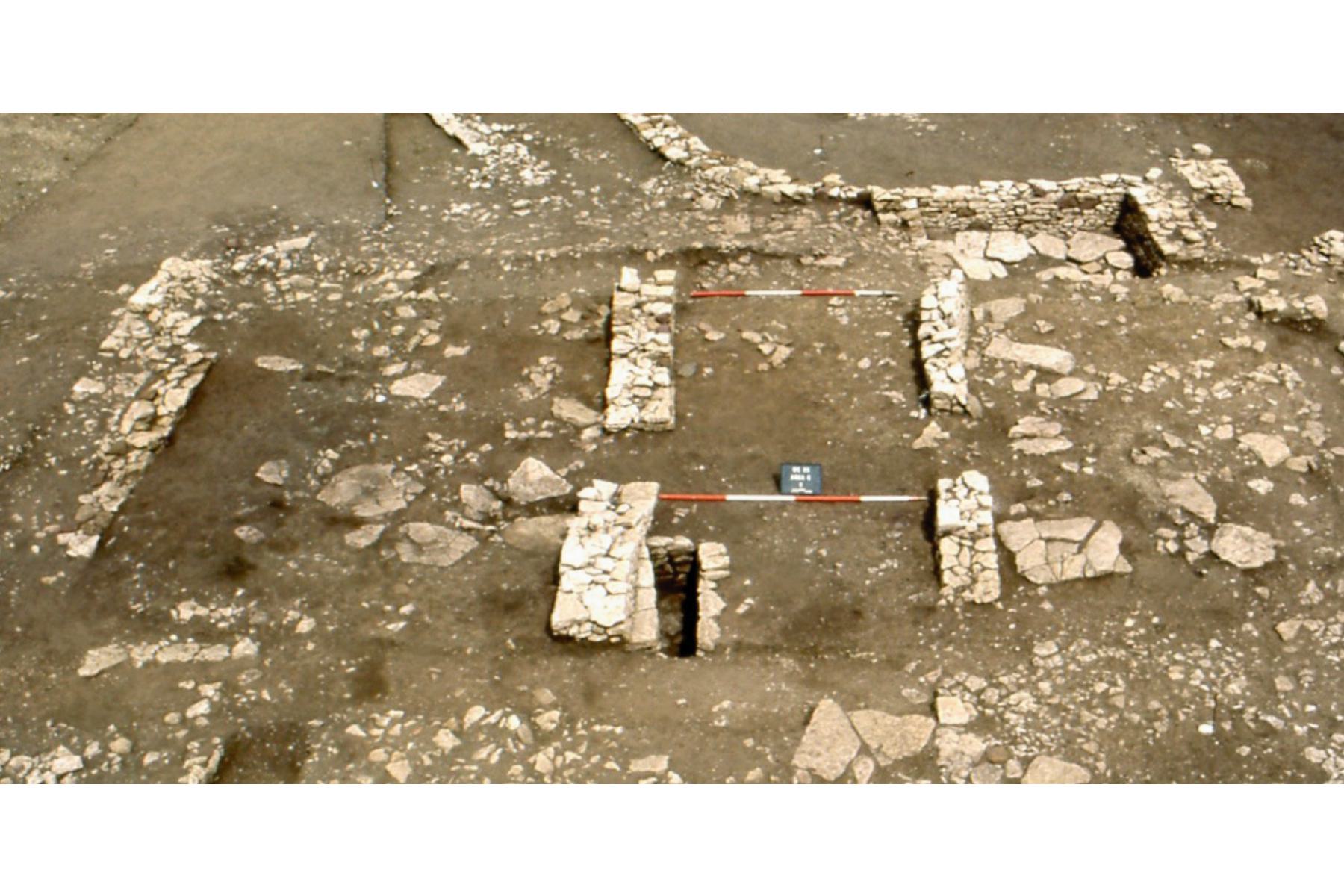
The dwelling in which “Norman Morris” was discovered
The figure's body is naturalistic, but his stylised, shield-shaped head with oval eyes, a broad nose, moustache-like lines and a pointed chin suggests a rare piece of Medieval folk art rather than the refined stonework usually found in high-status sites.
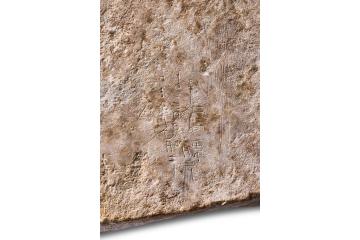
He was discovered upright within a three-roomed stone house, in the central space—likely a cross-passage—beside an internal cross wall and doorway. He stood at the end of a small, stone-lined pit, back to the wall, looking outward. At his feet lay a flat slab scratched with a Nine-Men’s-Morris gaming board—hence his ‘surname’. Although affectionately called ‘Norman’, he dates to around the mid-13th century.
‘Norman’ remains an enigma - who carved this figure, and why?Was he carved for protection, or a gaming companion? His mystery, charm, and everyday setting offer a rare, personal glimpse into Medieval life—making him a compelling addition to the Beyond the 100 exhibition.
Stanwick Lakes
Contributed by Stanwck Lakes / Archaeological Resource Centre
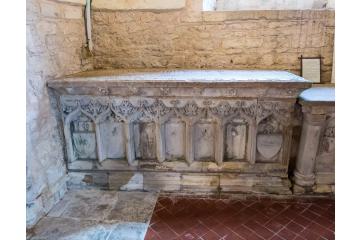
Medieval tomb chest for John Woodville in St. Mary the Virgin church in Grafton Regis. John Woodville was the great-grandfather of Elizabeth Woodville, Queen of England during the 15th century.
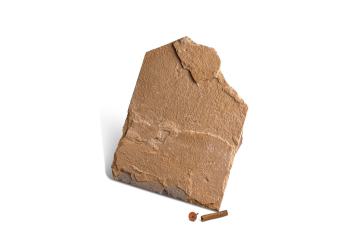
This is a rare type of medieval ceramic roof tile, replaced in the 13th century by standard rectangular ceramic or nib tiles used until the 20th century. The rarity of these roof tiles and their association with buildings of high status in Northampton, both religious and secular, is of historical and archaeological significance.

 © Andy Chapman
 © Andy Chapman
 ©
NMAG
©
NMAG
 ©
Grafton Regis Historians
©
Grafton Regis Historians
 ©
NMAG
©
NMAG
 ©
Andy Chapman
©
Andy Chapman