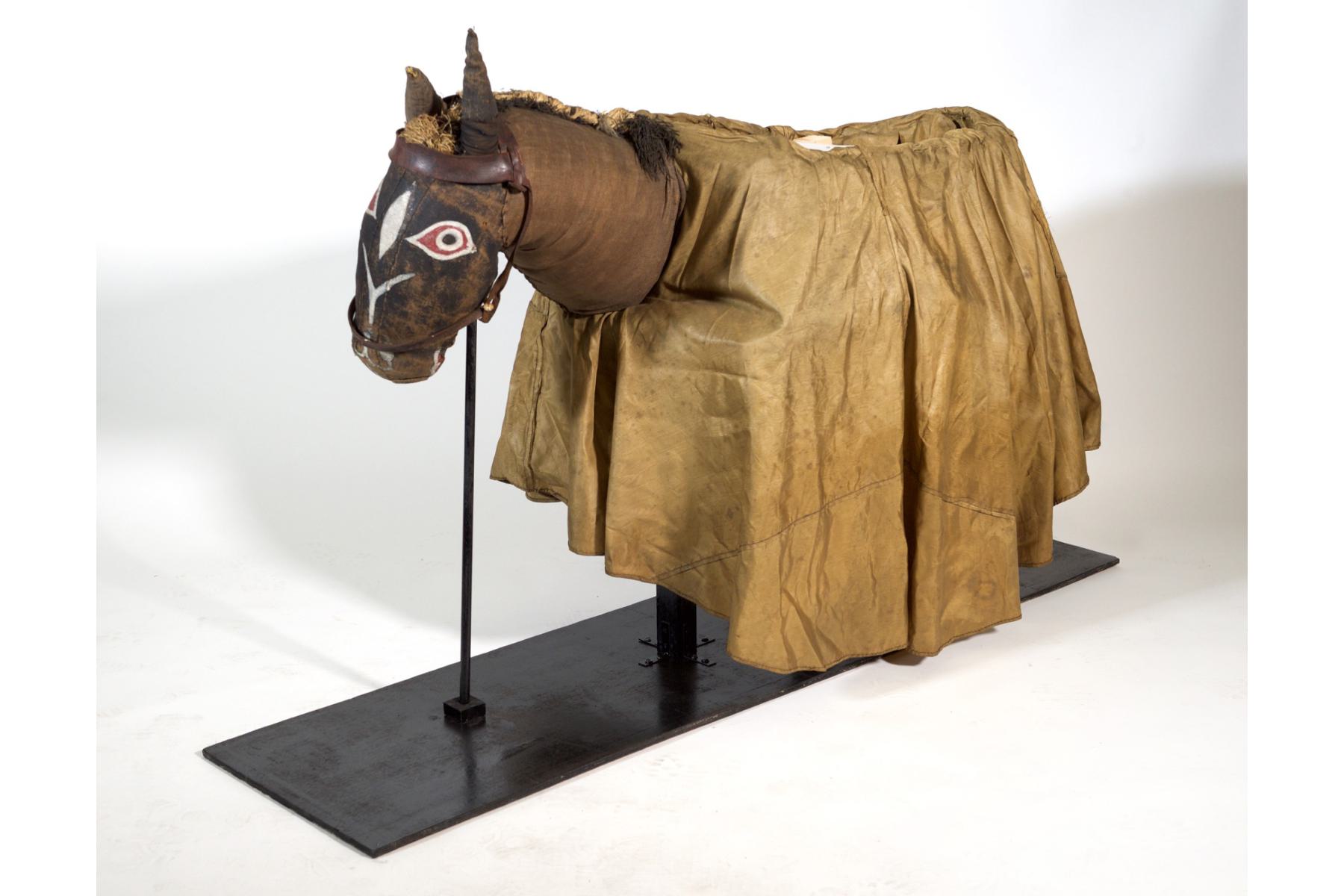
Hobby horse costume made for Yardley Gobion morris dance as part of May day celebrations
At the turn of the 19th century, the Morris dance was an important part of village life in Yardley Gobion, being performed annually on May Day from 1893 until at least 1925.
Thomas (Tommy) Cadd introduced Morris dancing to Yardley Gobion, having learned from the Brackley Morris. He was well known for playing Robin Hood, leading the procession wearing a green velvet jacket, red woollen shorts, a fur hat, and carrying a painted stick with a bullock’s bladder attached to attack the hobby horse. The dance was performed by a team of eight young men, who were accompanied by music from flutes, and occasionally a fiddle and a drum. Tommy’s dances were not recorded by contemporary collectors of folk dancing, and it is thought that he made many of them up, rather than following tradition.
While men traditionally performed the dance, the women of Yardley Gobion made the costumes. This costume for the hobby horse is unusual for its adaptions by local woman Mrs Leach, who made a more comfortable contraption by taking the bottom out of a wicker basket, attaching a skirt, and adding a head and tail.
The Morris Dance in Yardley Gobion declined after the First World War and stopped sometime before the May Day festival came to an end in 1931.
Number 71 of the objects selected for the A History of Northamptonshire in 100 Objects exhibition 2025.
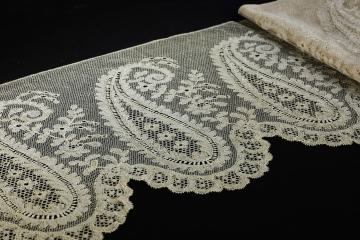
This Paisley Pear is an exceptional piece of Bucking Point Bobbin lace. Lacemaking was a prominent Northamptonshire industry from the 17th to 20th centuries.
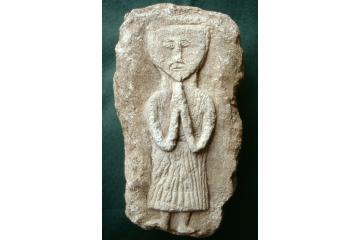
This unique limestone figure, carved in deep relief, shows a man in a long belted robe with hands held in prayer. Among thousands of Medieval objects excavated from the Deserted Medieval Hamlet of West Cotton, Raunds (1985–89), this one stood out and was affectionately nicknamed ‘Norman Morris’ by the archaeological team.

 © NMAG
 ©
NMAG
©
NMAG
 ©
Andy Chapman
©
Andy Chapman
 ©
Peterborough Museum
©
Peterborough Museum
 ©
NMAG
©
NMAG