Skip to main content Accessibility statement

We use cookies on this site to enhance your user experience.

By clicking the Accept button, you agree to us doing so. More info on our cookie policy.

View in timeline

Mediterranean marble used as decorative inlays on luxurious Roman furniture

3rd century Roman and Early Medieval

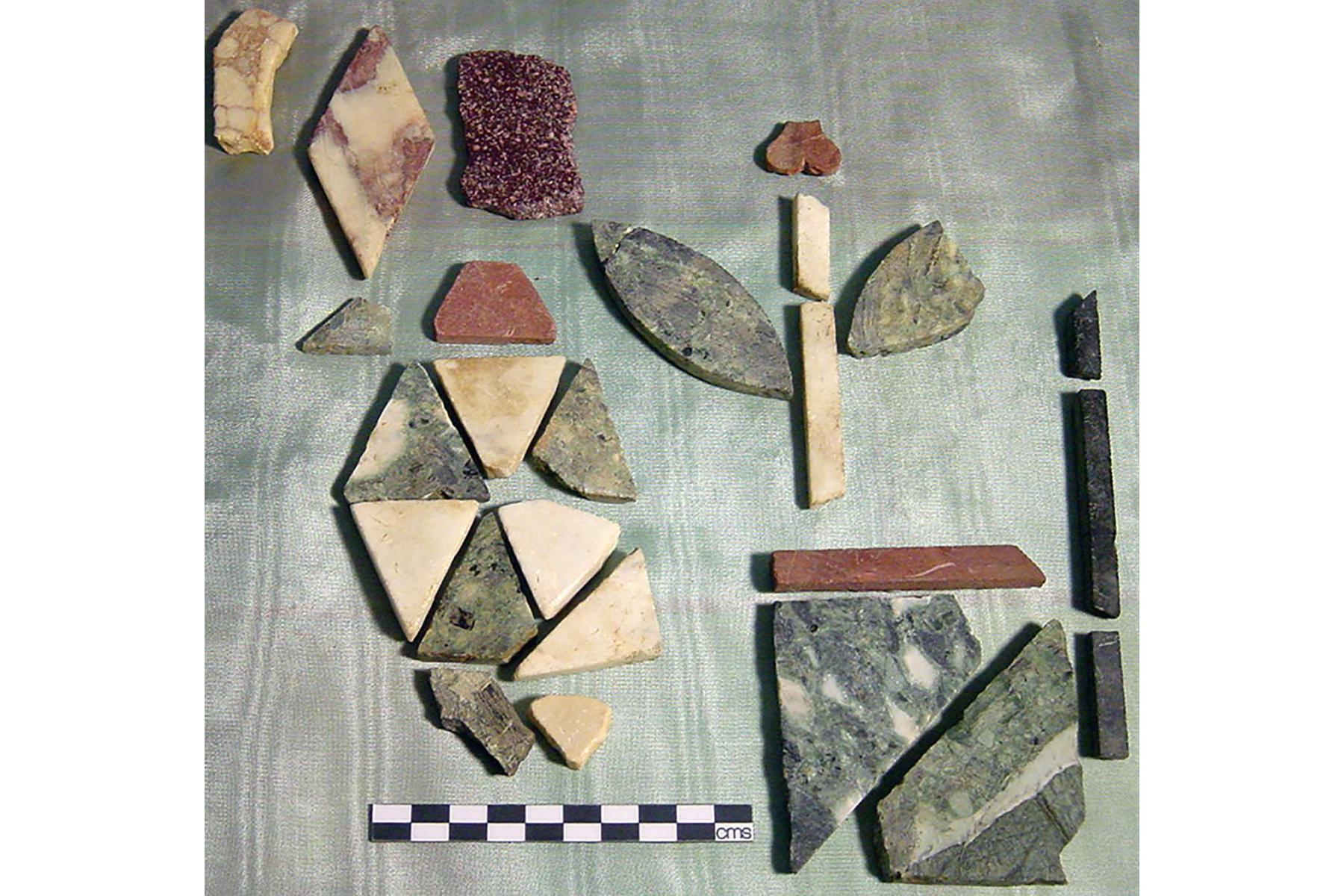
These marble pieces were excavated at the Roman villa at Piddington, from a third or fourth century rubbish heap.

pieces of decorative marble from Piddington Roman villa © UNAS
Mediterranean marble used as decorative inlays on Roman furniture
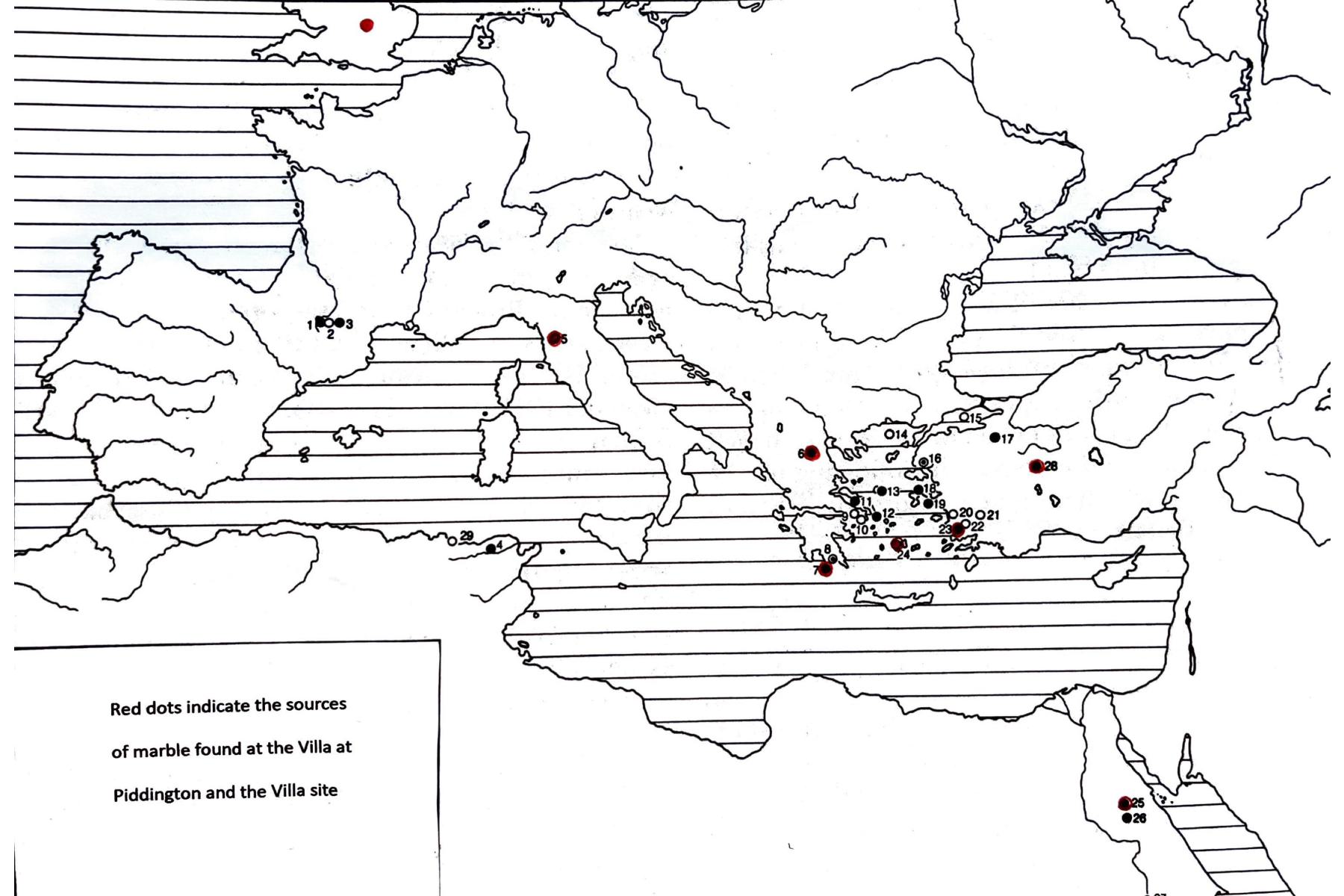
map showing origin of marble pieces © UNAS
Piddington - map of marble origin locations

They are part of a floral design, within a border, with flowers, stems and leaves.  The individual marble pieces come from several countries, such as Turkey (central Turkey and the coast), the Aegean islands, mainland Greece and Italy.  The porphyry came from Egypt, where there were just two quarries for this purple marble, under the control of the Emperor.  They probably formed part of a piece of furniture, either imported or made at a specialist workshop.  Perhaps it was a fine table in one of the main rooms of the villa. This method of inlaying carefully shaped and polished marble to form a pattern or picture, is known as opus sectile.

These delightful fragments raise so many questions, about trade in the Roman world, the skills of specialist craftsmen and the wealth of villa owners.

They are on display at Piddington Roman Villa Museum.

Piddington Roman Villa
Contributed by Piddington Roman Villa Museum

Explore related content (external site)

See our disclaimer

Related objects

  • Collyweston slate tile with copper pin and wooden peg fixings © NMAG
    Medieval to Tudor

    Collyweston Slate

    Collyweston slate roof tile. Quarried since Roman tiles and used extensively in the early modern period.

  • Carved stone figure mid-13th century © Andy Chapman
    Medieval to Tudor

    “Norman Morris” - Carved Stone figure from West Cotton,

    This unique limestone figure, carved in deep relief, shows a man in a long belted robe with hands held in prayer. Among thousands of Medieval objects excavated from the Deserted Medieval Hamlet of West Cotton, Raunds (1985–89), this one stood out and was affectionately nicknamed ‘Norman Morris’ by the archaeological team.

  • Large piece of  decorative stone with carved Anglo-Scandinavian interlace art style © NMAG
    Roman and Early Medieval

    Anglo-Saxon Stone

    Carved with typically Anglo-Scandinavian interlace, this stone was found reused in the Norman church of St Peters and may indicate an earlier 10th century church.

  • Roman lucet from Orton Waterville (formerly part of Northamptonshire and Soke of Peterborough) © Peterborough Museum
    Roman and Early Medieval

    Roman Lucet

    A lucet was used to make braids and cords. Found at a Roman military site this is the earliest example found in Britain or Europe.