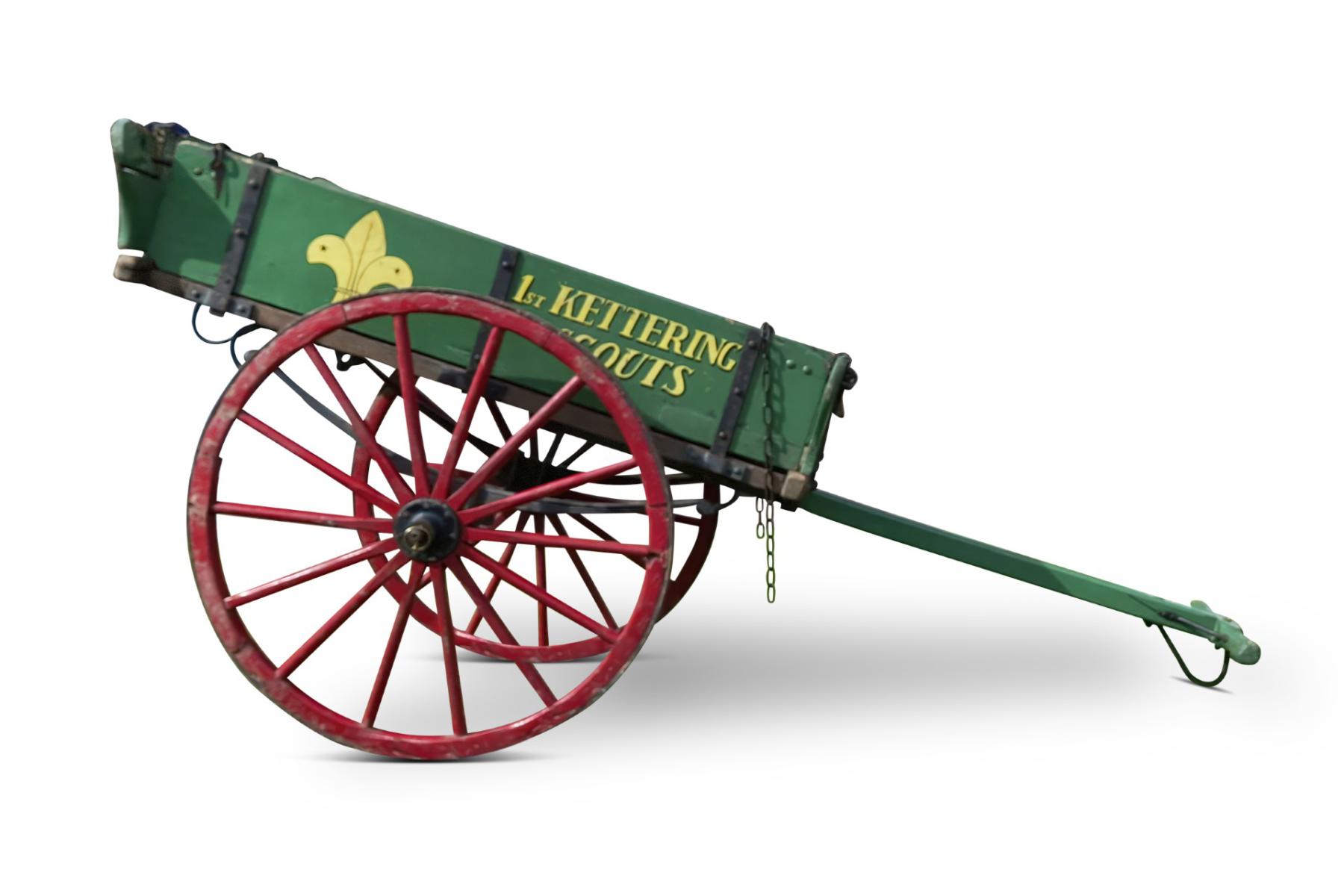
Painted wooden scout trek cart used by the 1st kettering Scout Group
Nearly 50 years ago, the Troop was preparing for Kettering Scout District’s Exhibition Camp. The boys in the Troop - unsupervised by adults, organised by themselves - spent the night moving the tents and equipment from their stores across the town using this trek cart. What better introduction to the eccentricities and freedoms offered by Scouting?
From 1907, the start of the Scout Movement, and before cars and rucksacks became readily available to assist, trek carts propelled by Scout-power offered the opportunity for the boys to transport all their tents and equipment to camp, then on site to help carry the heavy wood and water around. The condition of the Troop’s trek cart was a matter of pride to the Scouts.
We do not know the history of this trek cart before the 1940s, but the 1st Kettering (Parish Church) Scout Group has formed a major part of the early life for many of Kettering’s young people since 1909.
Whilst trek carts fell into disuse years ago with the ready availability of motor transport, that unique ethos of independence first offered to Scouts years ago by that trek cart is still a central part of Scouting in Northamptonshire – where young people are encouraged confidently to make their own way in the world.
Number 77 of the objects selected for the A History of Northamptonshire in 100 Objects exhibition 2025.
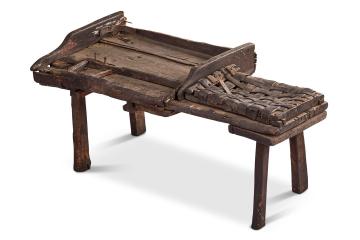
This shoemaker's bench is evidence of the shoemaking trade before mechanisation aand factory manufacture when solitary shoemakers mostly worked in small workshops in their home.
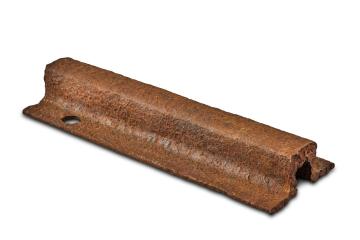
The railway came to Northamptonshire in the mid-1800s with the Broad Gauge track of Isambard Kingdom Brunel's Great Western Railway and a station at Aynho.

 © NMAG
 ©
NMAG
©
NMAG
 ©
NMAG
©
NMAG
 ©
NMAG
©
NMAG
 ©
NMAG
©
NMAG