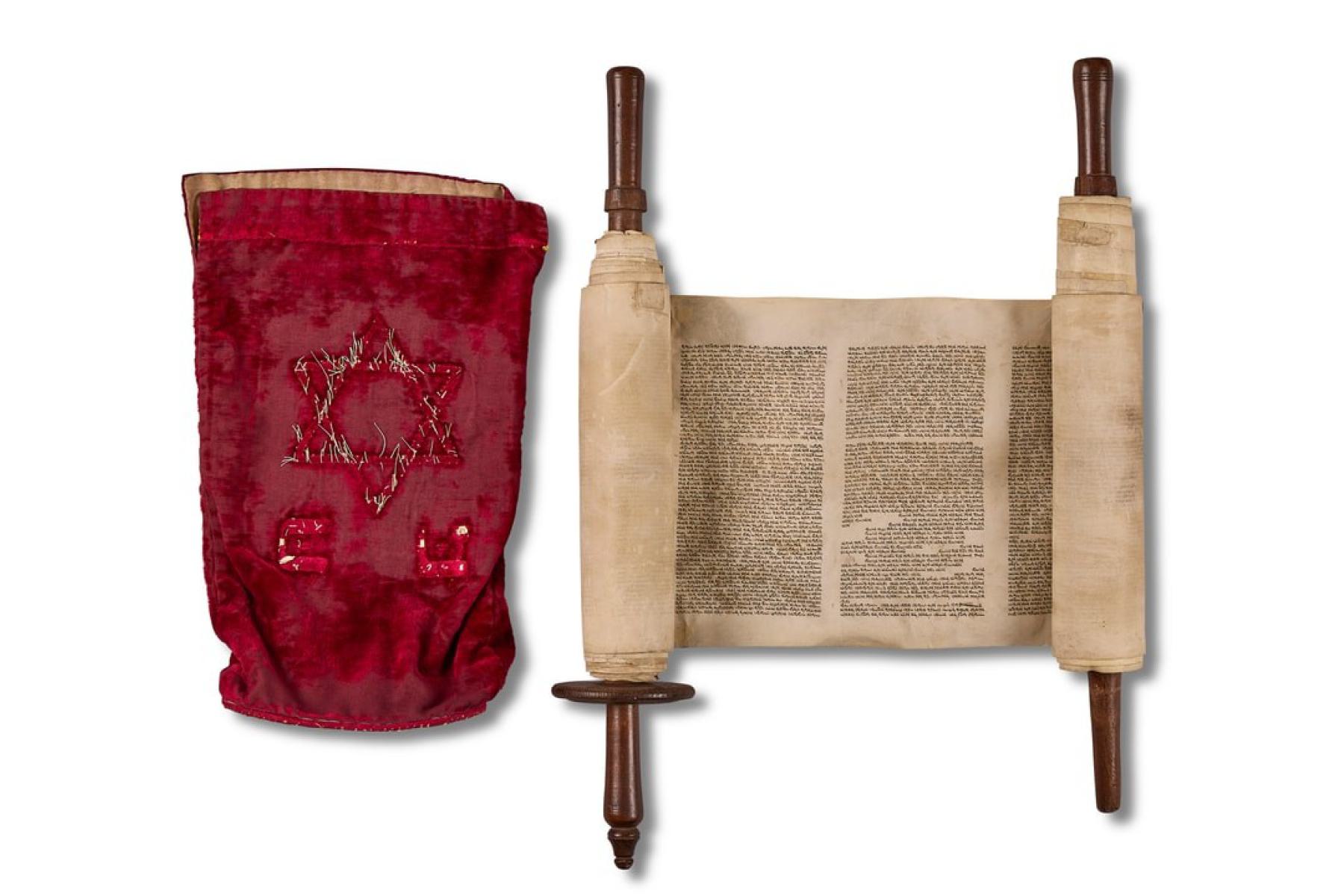
This is a scroll containing the five Books of Moses, hand written by a scribe using a quill pen on parchment. It is made in sections, as any mistake in even one word would require that section to be removed and be rewritten. The completed scroll is 20 metres in length and took a year to write.
This particular Torah was smuggled out of Austria by Mr Max Brandt, the son of a Jewish business owner from Vienna. He fled to the UK after the events of Kristallnacht (The Night of Broken Glass) when the Nazis destroyed synagogues and Jewish businesses on the 9 November 1938 although it probably dates to the 19th century.
Max was on holiday in the south of Austria when his best friend Mr. Kremlichka managed to obtain false papers for him to escape to the UK where he lived in Northampton. He smuggled this torah scroll across under his coat at great risk and bequeathed it to his niece Daphne Rudd who has placed it on permanent loan to the Northampton Hebrew Congregation.
It is now used to help educate children from Northamptonshire about Judaism, which is a positive response to the circumstances in which it was under threat in Austria.
Number 76 of the objects selected for the A History of Northamptonshire in 100 Objects exhibition 2025.
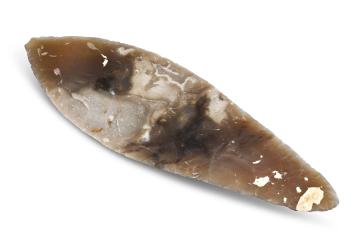
This flint dagger was found in a male burial in a barrow along with other grave goods. It had never been used so may have been an ornamental or ritual piece.

 © NMAG
 ©
NMAG
©
NMAG
 ©
NMAG
©
NMAG
 ©
NMAG
©
NMAG
 ©
NMAG
©
NMAG