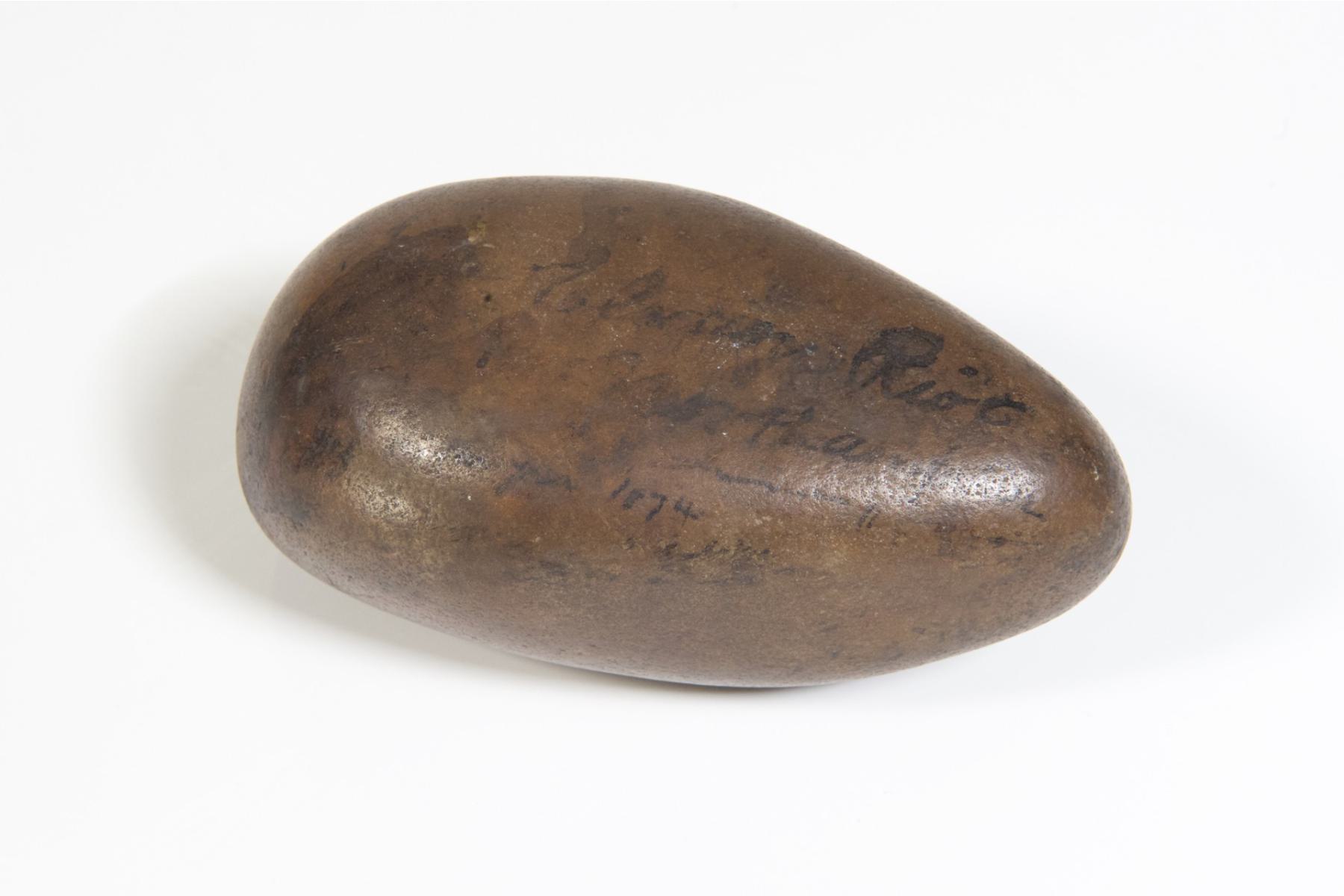
In 1874 this cobble stone was torn up from the surface of the Market Square as large crowds violently protested and rioted about the results of the recent local elections. The Liberal candidate Charles Bradlaugh had been defeated by the Conservative party candidate, Charles George Merewether. On hearing the result read out by the town crier, Bradlaugh’s supporters became violent causing damage to local buildings, including the Lord Palmerstone pub. The disturbance increased to such a level that the Lord Mayor read the Riot Act in an effort to make the crowds leave.
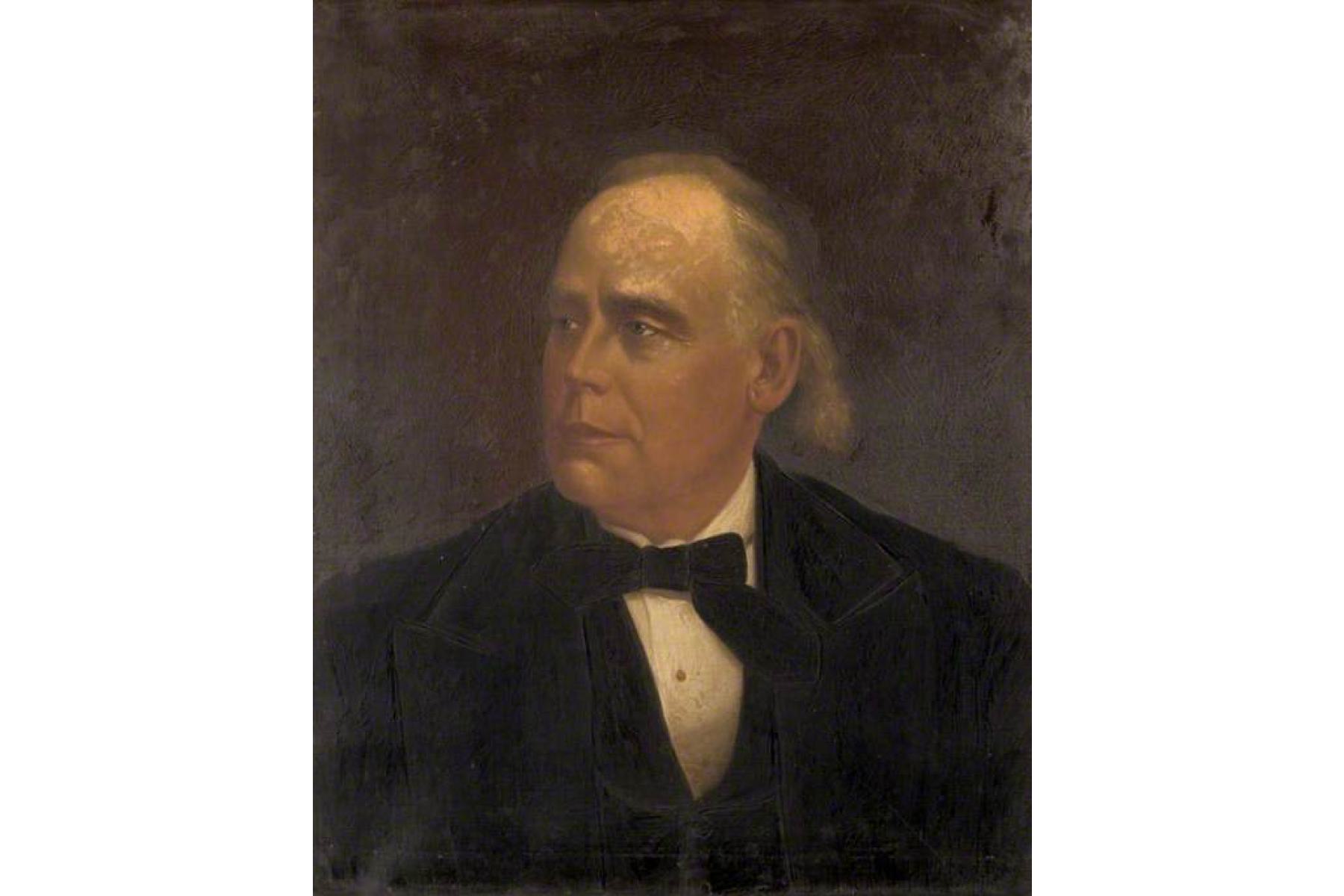
Charles Bradlaugh was a political reformer and staunch atheist, co-founding the National Secular Society in 1866. When he was finally elected member of Parliament for Northampton in 1880, he was barred from taking his seat in the House of Commons because he refused to say the phrase ‘So help me God’ at the end of the Oath of Allegiance. After years of campaigning, the Oaths Act 1888 allowed for oaths to be solemnly affirmed, rather than sworn to God. The Oath of Allegiance still raises controversies, with Clive Lewis MP having to affirm twice in 2024, after failing to swear allegiance to the King and his heirs on his first attempt.
Number 68 of the objects selected for the A History of Northamptonshire in 100 Objects exhibition 2025.
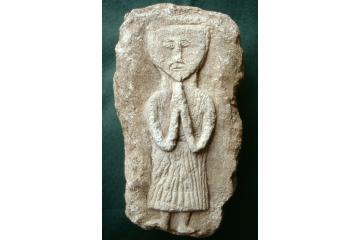
This unique limestone figure, carved in deep relief, shows a man in a long belted robe with hands held in prayer. Among thousands of Medieval objects excavated from the Deserted Medieval Hamlet of West Cotton, Raunds (1985–89), this one stood out and was affectionately nicknamed ‘Norman Morris’ by the archaeological team.
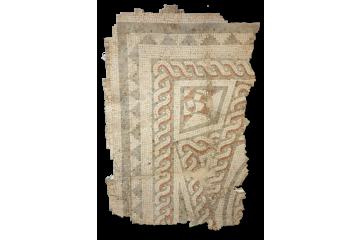
This fragment of Roman mosaic flooring is on display in Daventry Museum. It is part of a larger decorative floor, discovered in 1823 on Borough Hill, Daventry by historian George Baker, with a full excavation carried out in 1852 by Beriah Botfield, MP.

 © NMAG
 © NMAG
 ©
Andy Chapman
©
Andy Chapman
 ©
NMAG
©
NMAG
 ©
NMAG
©
NMAG