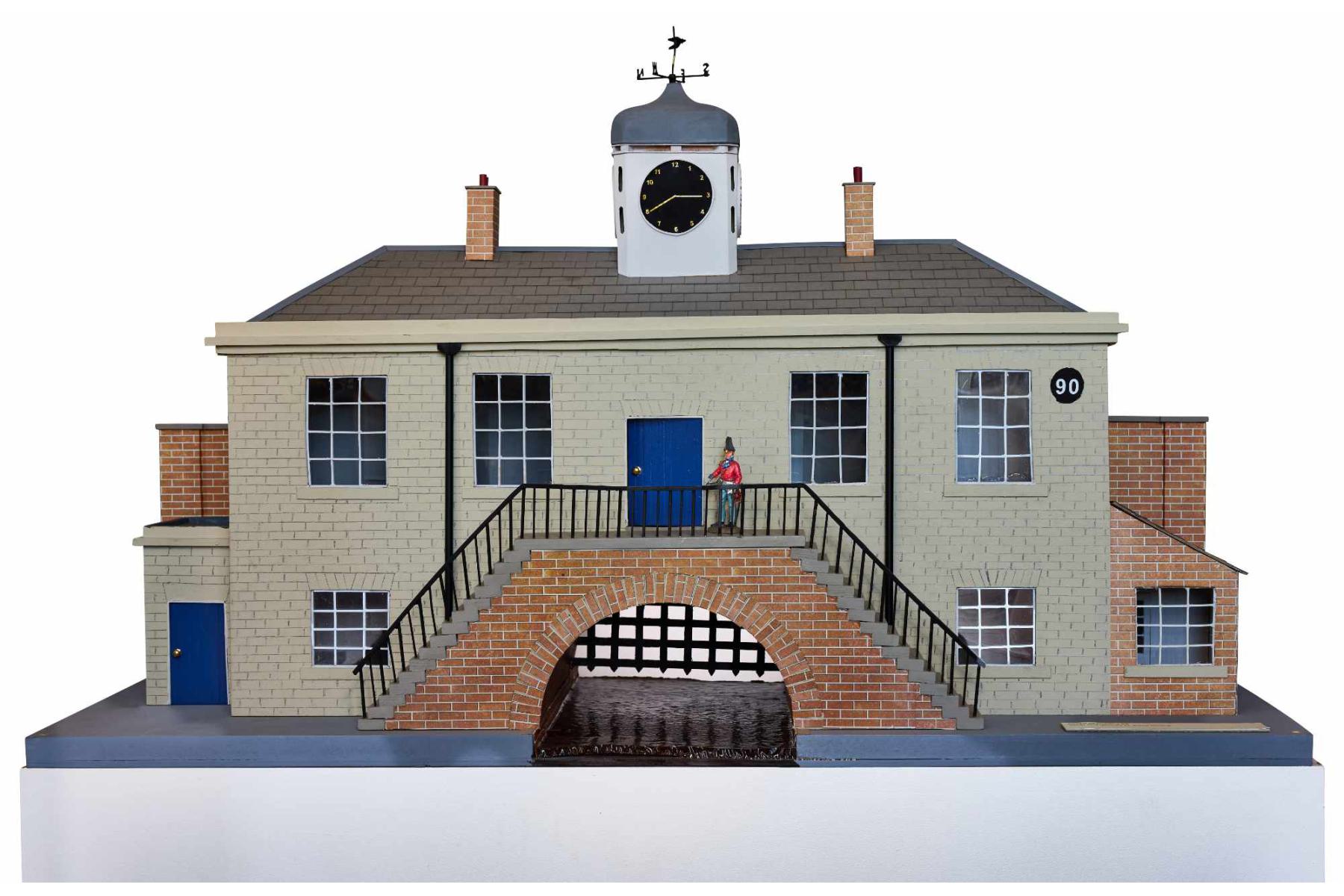
Model of Eastern gatehouse, Weedon Royal Ordnance Depot
In the early 1800s the British Army needed to hold muskets, cannon and gunpowder far from the coast and the threat of invasion by Napoleon Bonaparte. Weedon in Northamptonshire on the Watling Street trunk road, from London, and the Grand Junction Canal was chosen. Under the command of Captain Pilkington of the Royal Engineers, the Depot with huge storehouses and powder magazine rose behind high walls.
The Depot grew to 150 acres with barracks, workshops, a hospital, prison, hundreds of horses and thousands of troops. Everything soldiers needed - boots, blankets and millions of other items - passed through its gates by narrowboat, road and rail. Civilians worked alongside soldiers, generations of men and women sworn to secrecy. It was the heart of a community.
Its military role ended in 1965 and Weedon’s place in history forgotten. Today privately owned and Grade II Listed, its canal, Georgian buildings and many others can be explored. The eastern gatehouse with working 1814 clock above and portcullis below is now The Depot Visitor Centre and Heritage Exhibition. In this model of the gatehouse, the figure of Captain Robert Pilkington stands on the steps surveying The Royal Ordnance Depot Weedon Bec, which he helped build.
Number 62 of the objects selected for the A History of Northamptonshire in 100 Objects exhibition 2025.
Weedon Bec
Contributed by Steve Larner, The Royal Ordnance Depot , Weedon Bec Visitor Centre
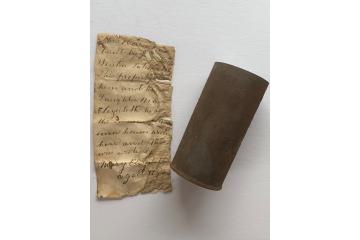
This tin can, 10.8cm tall, diameter 4.9cm, was discovered in the 1960s during the demolition of a row of houses in Burton Latimer called Wallis’s or Maycock’s Yard.

 © NMAG
 ©
NMAG
©
NMAG
 ©
NMAG
©
NMAG
 ©
NMAG
©
NMAG