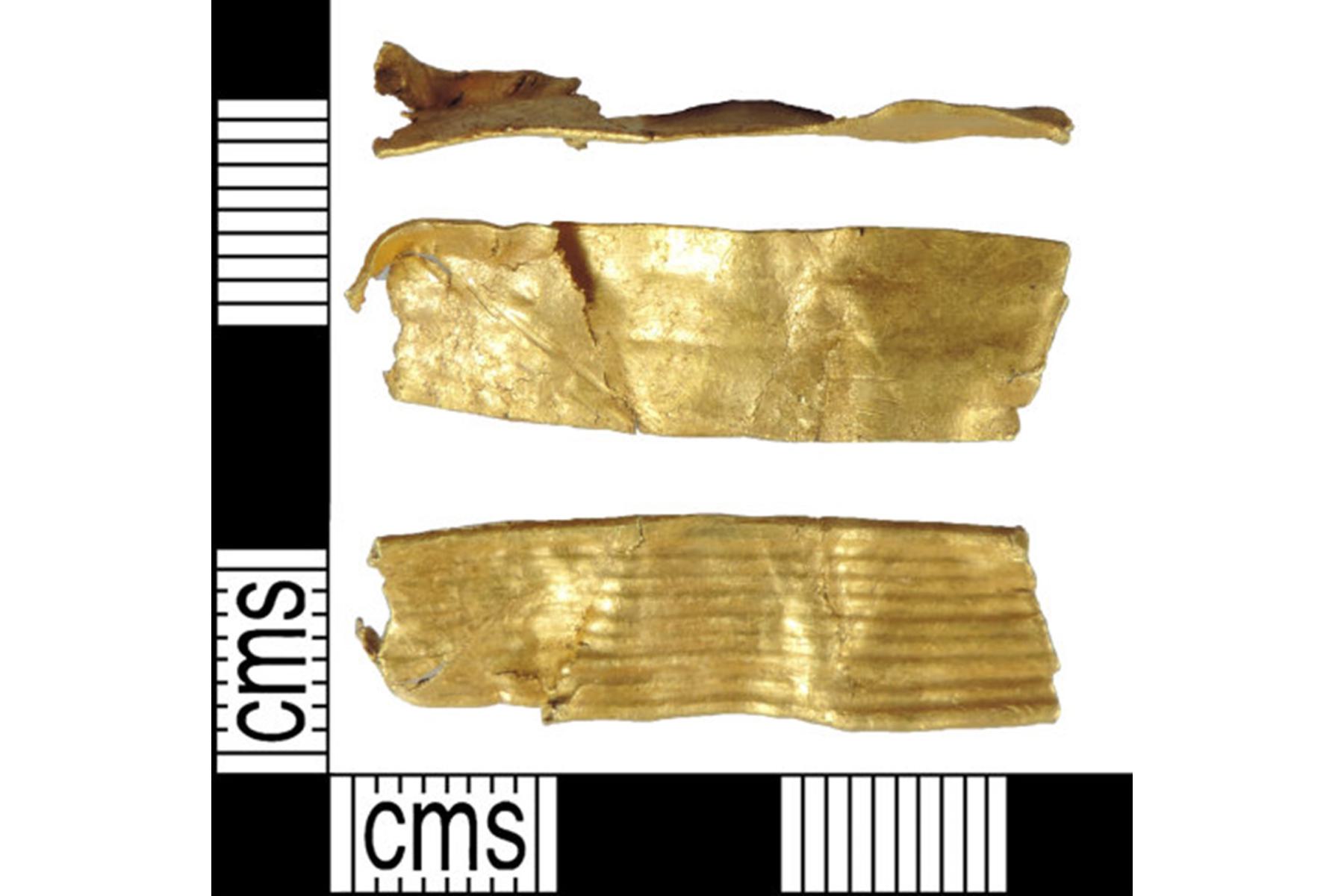
Bronze Age gold ribbon - side views and size indication
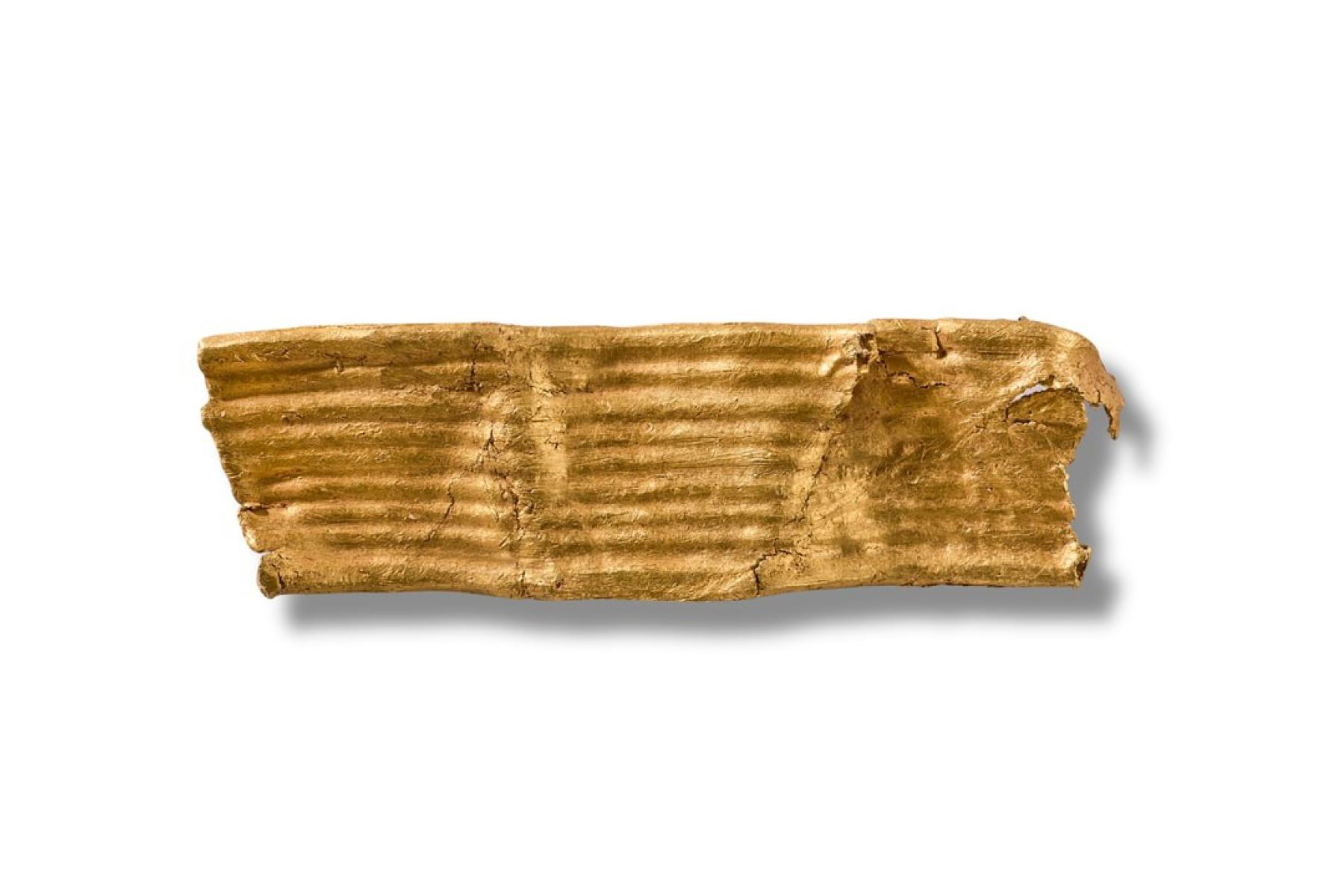
This strip of decorated gold ribbon, found in Grafton Regis, shows how highly skilled Bronze Age people were at working different metals including gold and silver. Throughout human history, gold has been considered a luxury metal due to its rarity, malleability (ability to be shaped) and distinctive gleam and similar to today gold would have symbolised elite status and wealth. The ribbon with its broken ends, may have served as an ornament that was worn or applied as mount on another object. This 3.2cm long length of ribbon is incised with 8 longitudinal lines on one side and similar pierced gold ribbons have been found from the Bronze Age across Britain and Europe where they have been used to adorn jewellery and sword pommels.
Number 14 of the objects selected for the A History of Northamptonshire in 100 Objects Exhibition 2025
2nd Image: CC Licence: The Portable Antiquities Scheme
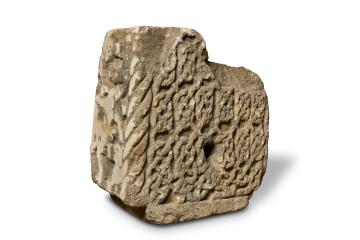
Carved with typically Anglo-Scandinavian interlace, this stone was found reused in the Norman church of St Peters and may indicate an earlier 10th century church.
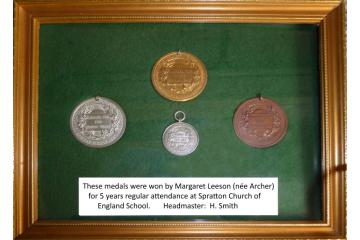
These are the Archer Attendance Award Medals, awarded to Margaret Archer, a pupil at Spratton CE Primary School between approx. 1907 and 1912. There are four medals, awarded for two, three, four and five years good attendance respectively.

 © NMAG
 © Creative Commons Licence
 ©
NMAG
©
NMAG
 ©
NMAG
©
NMAG
 ©
NMAG
©
NMAG