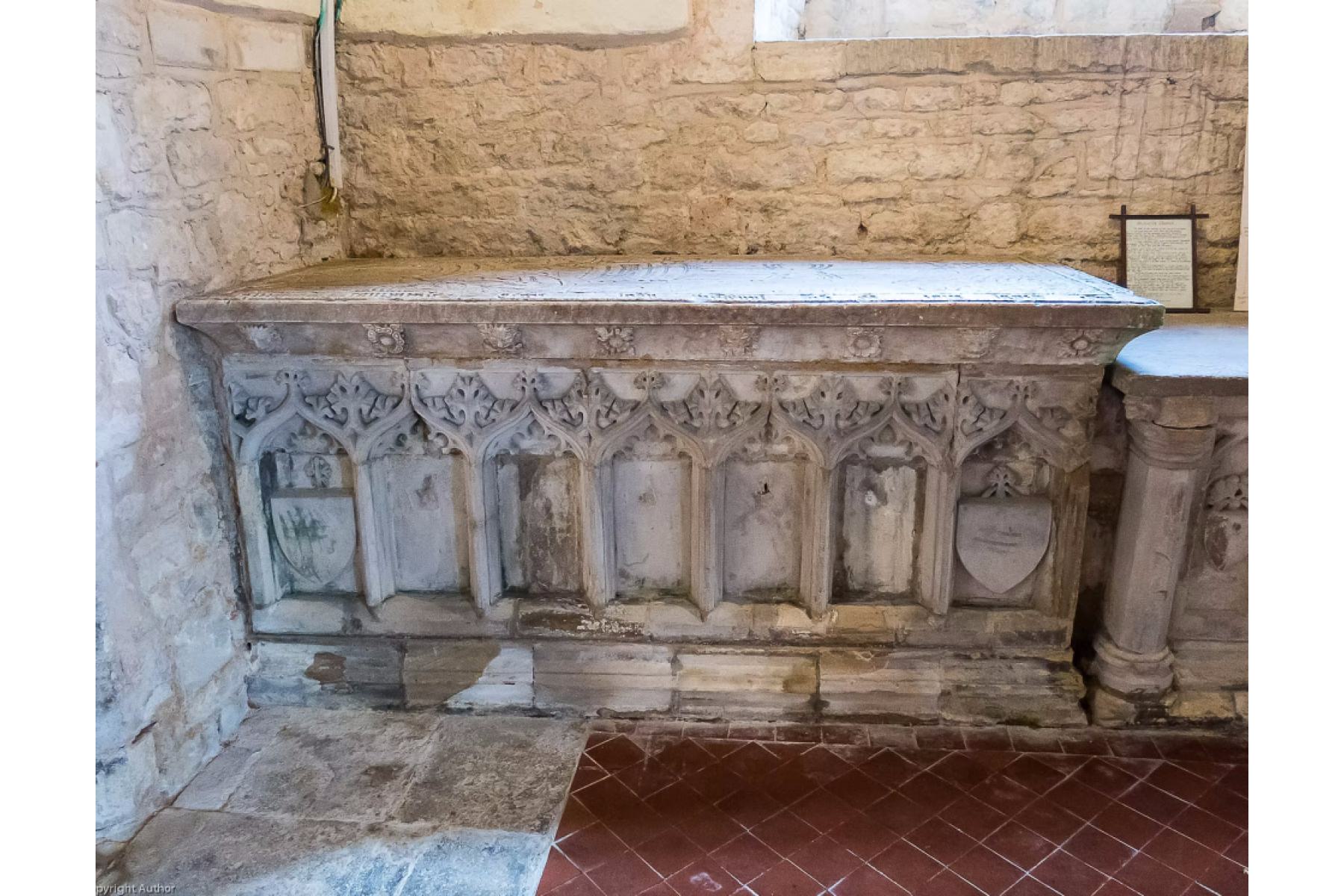
Medieval tomb chest for John Woodville in St. Mary the Virgin church in Grafton Regis. John Woodville was the great-grandfather of Elizabeth Woodville, Queen of England during the 15th century.
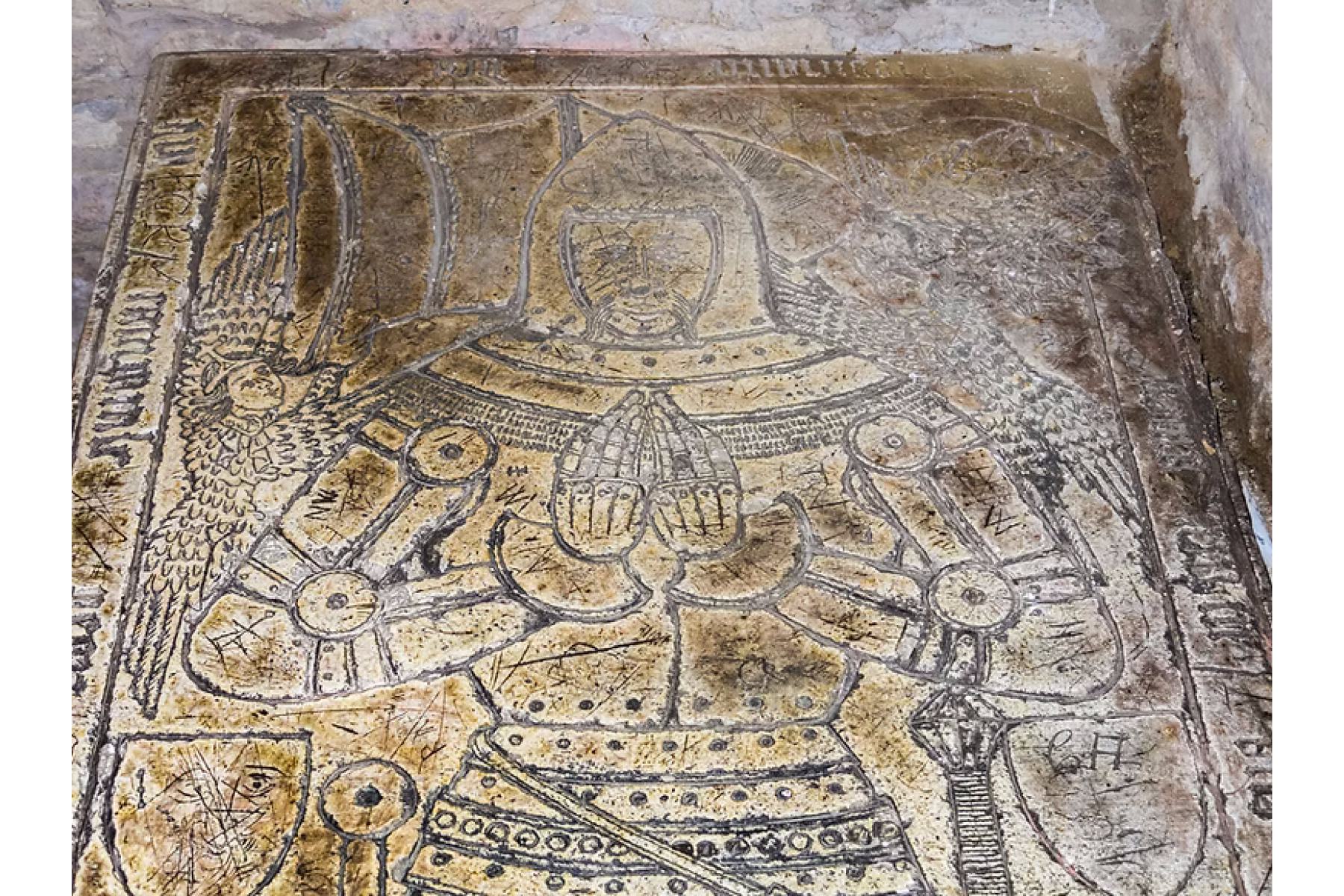
Alabaster grave engraving for tomb of John Woodville
The Woodville tombs are medieval tomb chests. The tomb with the inscription to John Woodville, portraying him in full armour on the alabaster slab, is the tomb of the great-grandfather of Elizabeth Woodville, Queen of England. The chest tomb has seven ogee-headed arched panels, shields to panels either end and the incised slab is inscribed to Sir John Wydevyl and dates to around 1415.
This is the only known tomb in Northamptonshire and the UK identified as being that of a direct ancestor of Elizabeth Woodville, who was born at Grafton Regis.
The Woodville tiles, exhibited at the A History of NOrthamptonshire in 100 Objects exhibition showingshowing the Woodville coat of arms and the York rose, are part of the floor of the lost Hermitage Church rediscovered in 1964. This tiled floor was made for the marriage of Elizabeth Woodville to Edward IV on May Day 1464 at Grafton Regis.
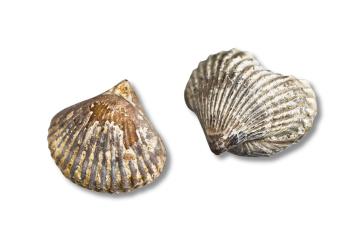
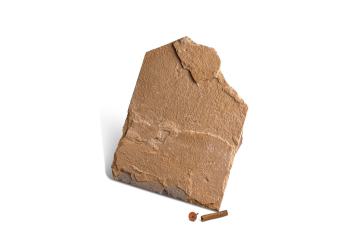
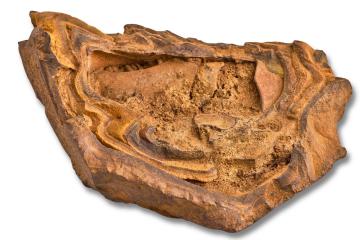
Northamptonshire’s ironstone was formed from iron-rich sediments in the Jurassic period. Quarried since Roman times, ironstone has shaped our landscape, fuelled the county's industry and built our houses.

 © Grafton Regis Historians
 © Grafton Regis Historians
 ©
NMAG
©
NMAG
 ©
NMAG
©
NMAG
 ©
NMAG
©
NMAG
 ©
NMAG
©
NMAG