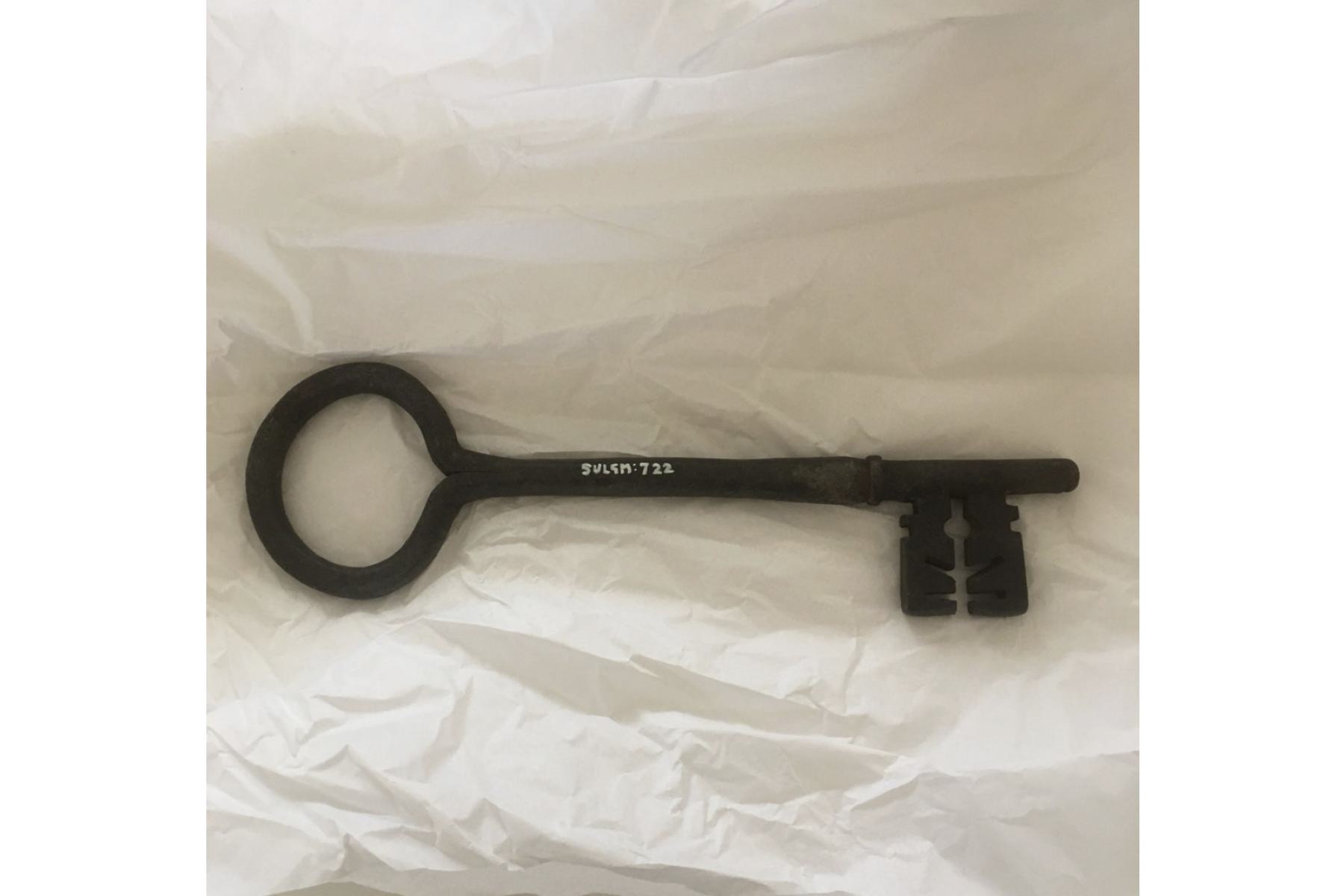
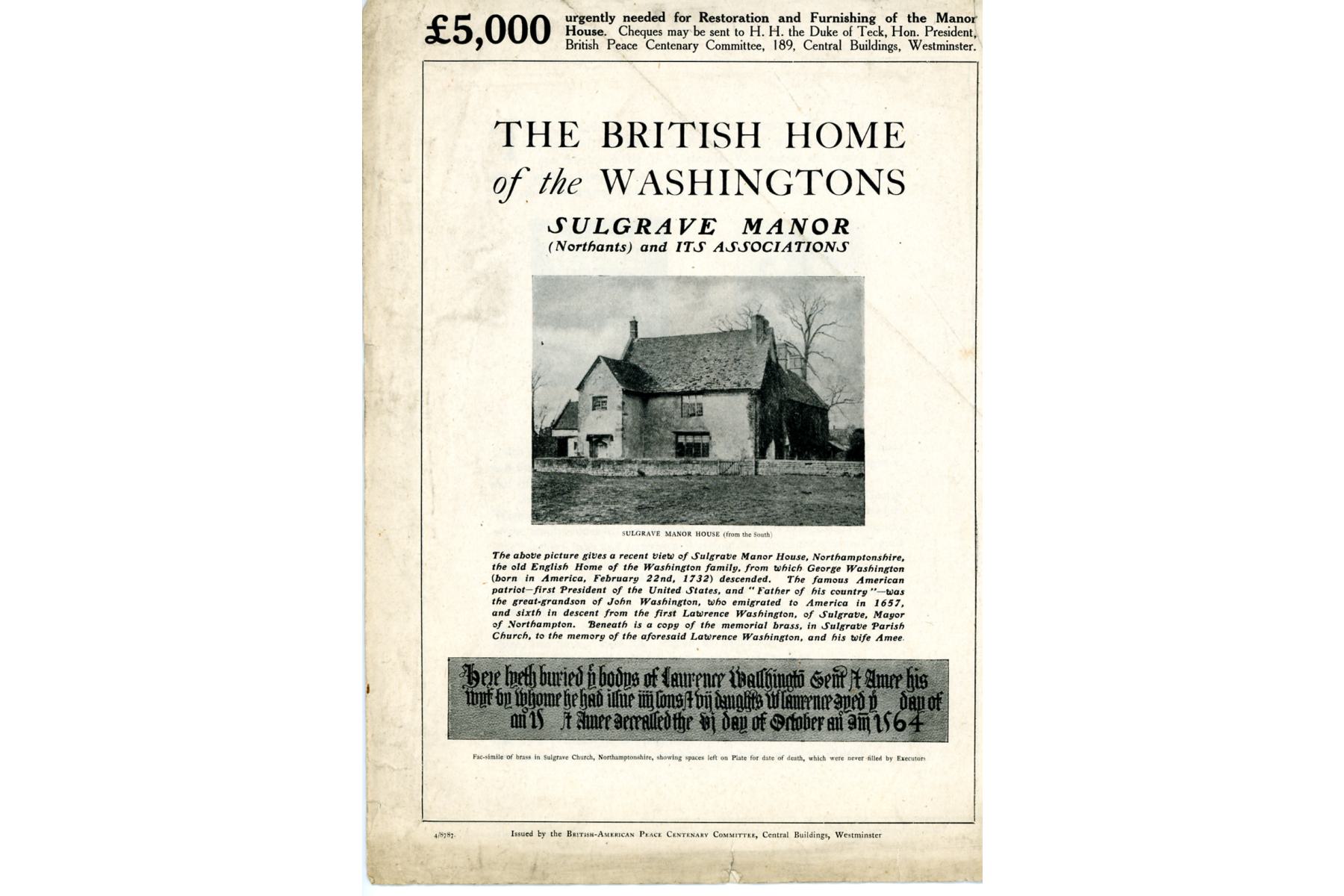
For centuries this key unlocked the door of Sulgrave Manor; today it unlocks a shared history between Northamptonshire and the USA. The key, made of wrought iron, belonged to Lawrence Washington, who built Sulgrave Manor between 1539 and 1560. It was Lawrence’s five times great-grandson, George, who became the first President of the USA in 1789, some 250 years later.
The key was presented to Sulgrave Manor in 1941 by Zula Woodhull in honour of her mother, Victoria Woodhull Martin (1838-1927). Born in rural Ohio to a poor family, Victoria led an exciting and at times controversial life. She was, at times, a clairvoyant, stockbroker, newspaper founder and lecturer. She was also a Suffragist and became the first woman to run for the president of the United States in 1872.
Towards the end of her life, Victoria retired to her country estate in Worcestershire. An active member of the ‘Sulgrave Movement’, she was the most generous contributor to the fund to buy Sulgrave Manor as a symbol of kinship between the United Kingdom and United States.
Usually kept at Sulgrave Manor the key is on display at Towcester library as part of the Beyond the 100
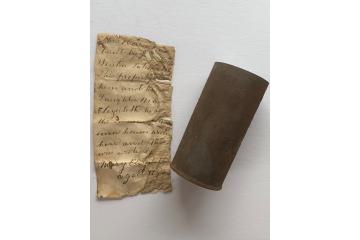
This tin can, 10.8cm tall, diameter 4.9cm, was discovered in the 1960s during the demolition of a row of houses in Burton Latimer called Wallis’s or Maycock’s Yard.
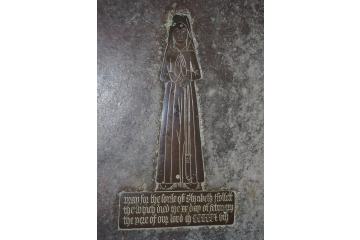
This tomb is believed to be that of a young girl, Elizabeth Follett, thought to be the daughter of John Follett a stonemason in the employ of Lady Margaret Beaufort at her Palace in Collyweston. Elizabeth Follett was buried in February 1508.

 © Sulgrave Manor
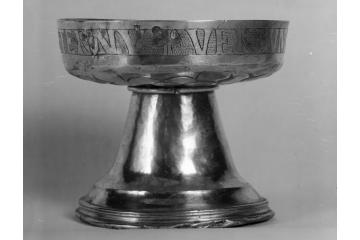 ©
The Trustees of the British Museum
©
The Trustees of the British Museum
 ©
NMAG
©
NMAG