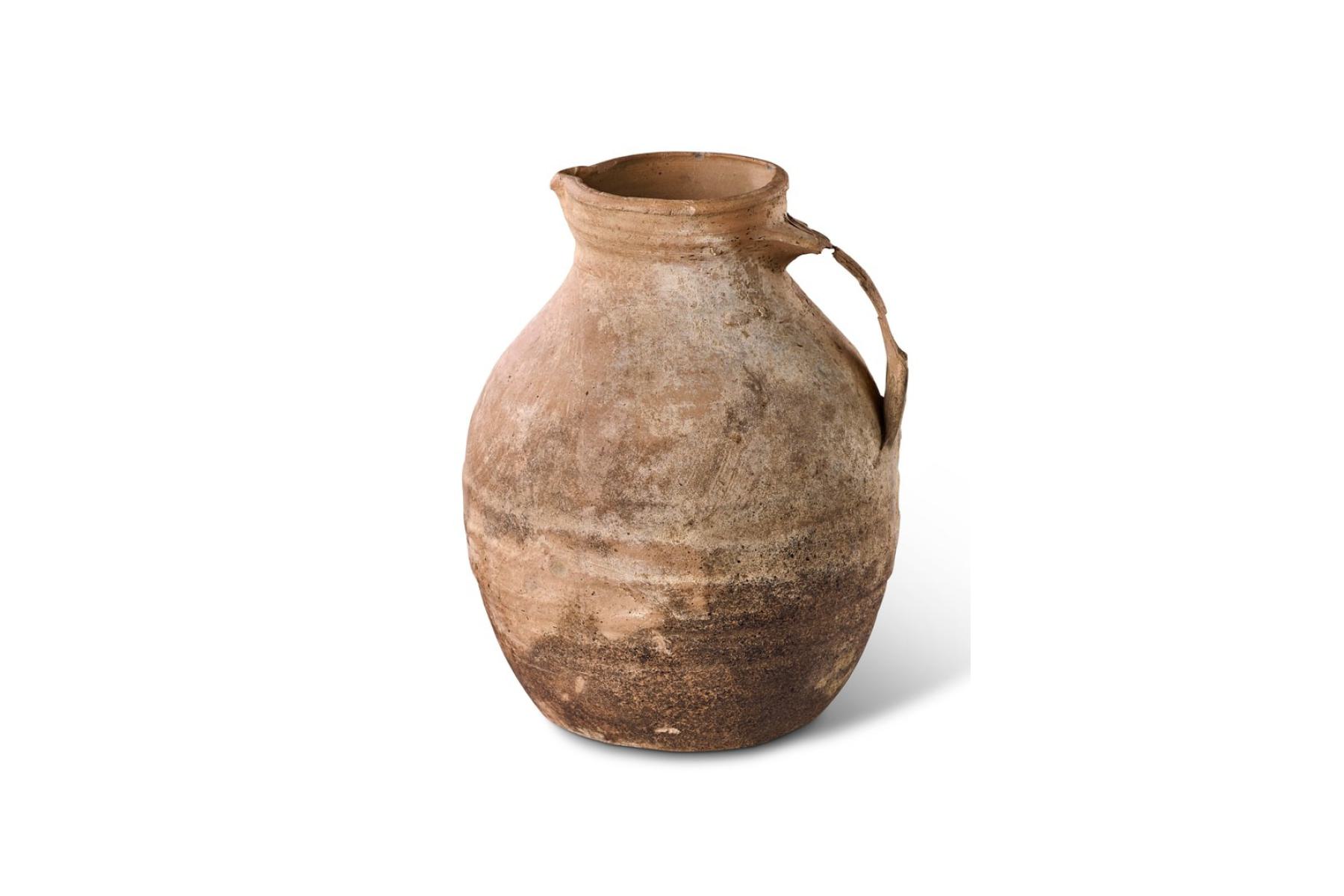
Large pottery jug made in village of Potterspury, Northamptonshire
Pottery production was important to Potterspury which is why the village name has included a reference to pottery since the thirteenth century. Although the quality of Potterspury ware was not the finest, and it may not have travelled well, for over 400 years it provided vital utensils for rural communities across areas of Northamptonshire, Oxfordshire, Buckinghamshire, and Bedfordshire.
The kilns were simple in structure and wood-fired indicating small scale manufacture. Clay was found locally, and fuel was obtained from the nearby forest of Whittlewood. However, by the early-seventeenth century industrially produced good quality pottery from Derbyshire and Staffordshire, along with improved transport across Britain, had destroyed the market for locally produced wares.
Numerous kilns have been found throughout Potterspury since the first kiln was excavated in 1949 by the Ashmolean Museum in Oxford but intact local examples of locally produced pottery are rare. This jug was discovered during house construction in Church End in the 1970s. It was discovered in the remains of a kiln beneath the floor of a barn by a builder, who retained it but returned it to the house owners 40 years later in 2014.
Number 48 of the objects selected for the A History of Northamptonshire in 100 Objects exhibition 2025.
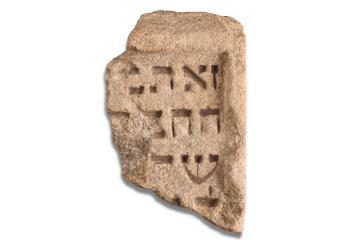
This Jewish tombstone fragment is one of two surviving medieval inscriptions in England; indicating a thriving medieval Jewish community living in Northampton at the time.

 © NMAG
 ©
NMAG
©
NMAG
 ©
NMAG
©
NMAG
 ©
NMAG
©
NMAG
 ©
NMAG
©
NMAG