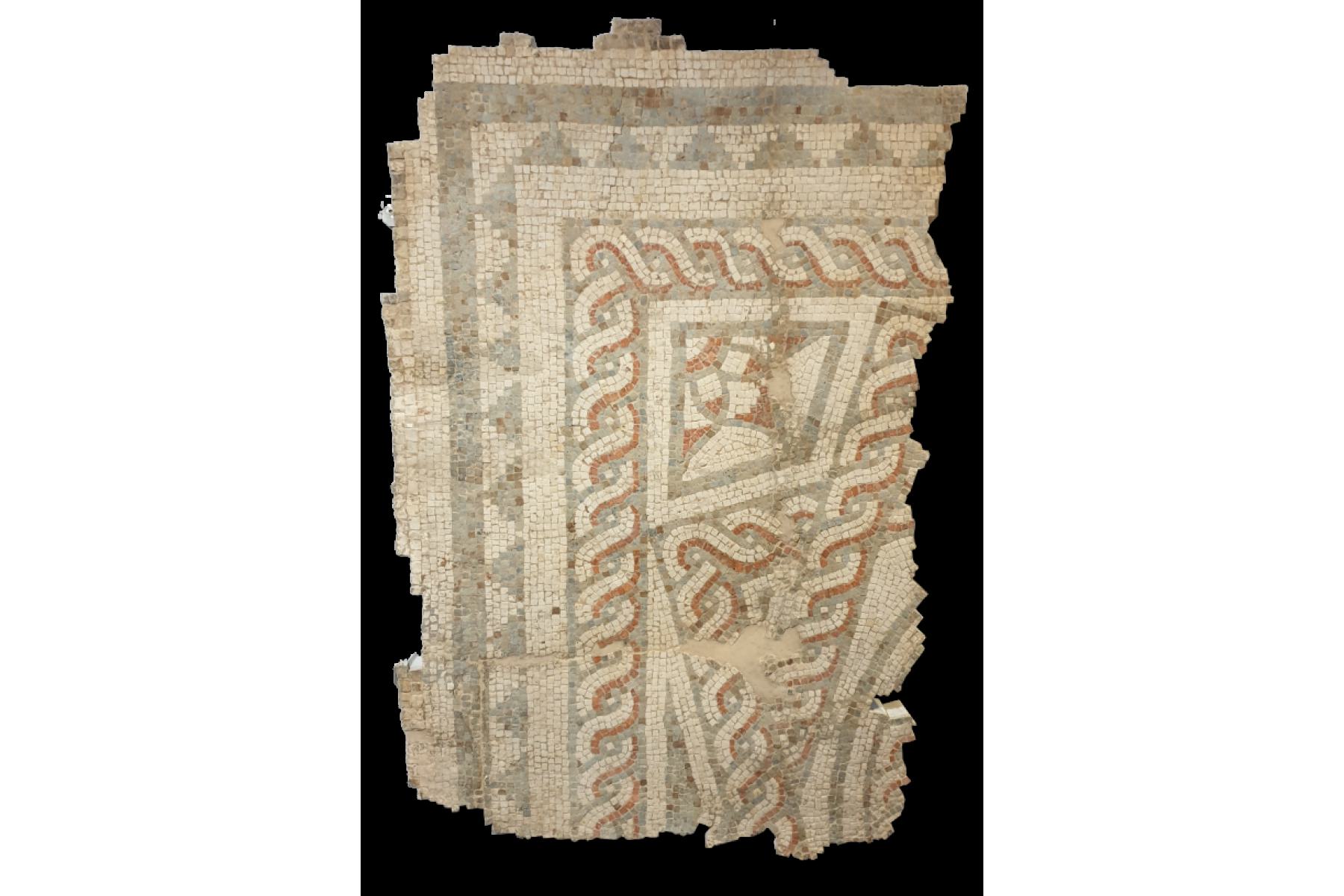
This fragment of Roman mosaic flooring is on display in Daventry Museum. It is part of a larger decorative floor, discovered in 1823 on Borough Hill, Daventry by historian George Baker, with a full excavation carried out in 1852 by Beriah Botfield, MP.
Roman Mosaic Floor Fragment from Borough Hill, Daventry
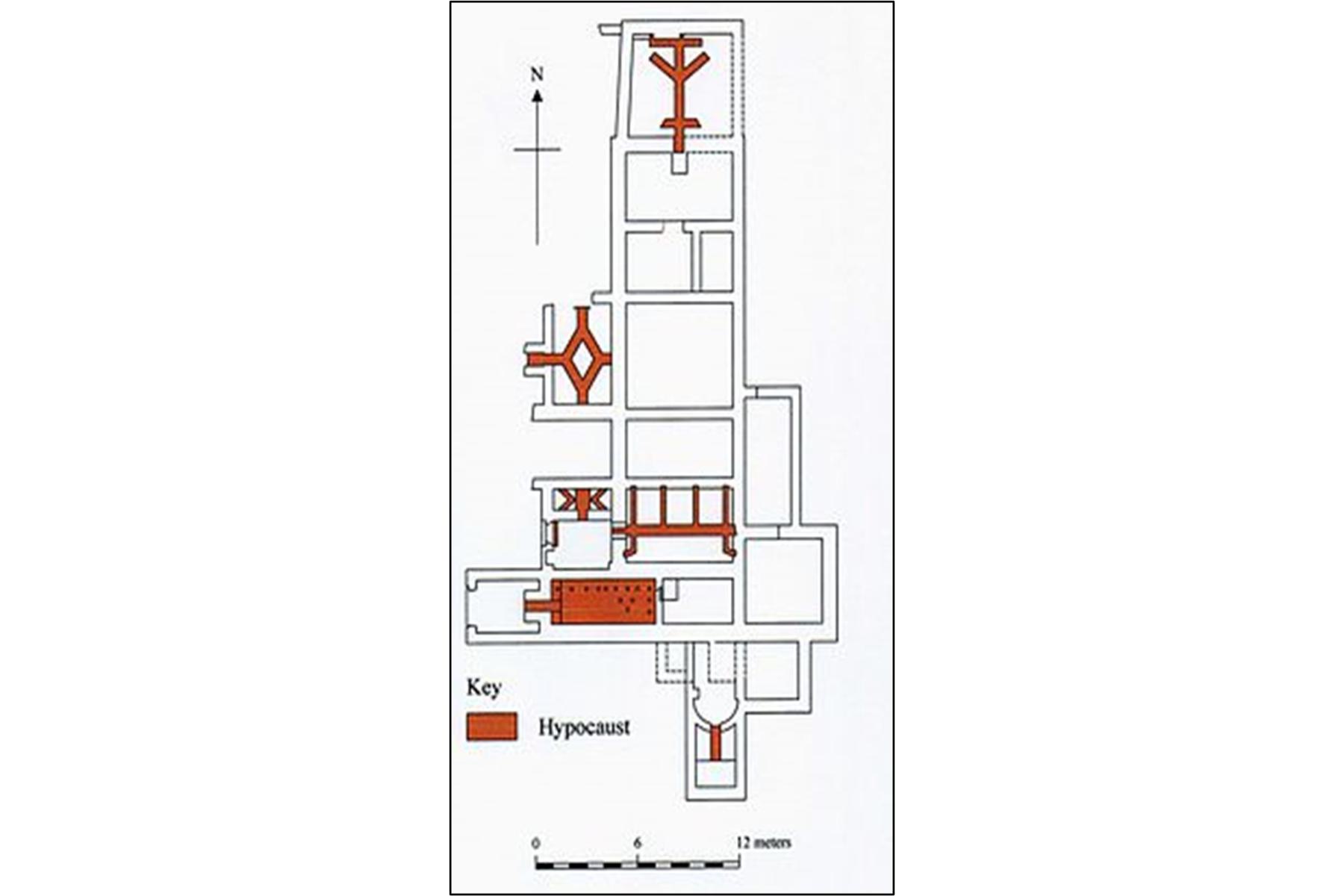
Conservation image showing some of the previously lost tesserae in blue
The mosaic fragment is approximately 150cm tall and 100cm wide and is made from small pieces of stone (called tesserae) in grey and cream shades, and a reddish brown. There is debate about whether the building surrounding it was a villa; unlikely due to its exposed position, or could it have been a temple with an altar placed on the circle at the centre of the mosaic. Prior to the Roman invasion the site was home to an Iron Age hillfort, sites on which the Romans often built temples.
The mosaic came to the museum in a very different condition to how it appears today. At some point it had been supported by limestone and slate slips, backed with cement and framed in a wood surround before being lacquered. In 2021, Daventry Town Council decided it was of great importance to the town to restore and conserve the mosaic. Experts at Skillington Workshop removed the excess material and recovered previously ‘lost’ tesserae, these are shown in blue on the conservation image. More information about the original digs can be found in William Edgar’s 1923 book Borough Hill Daventry and its History, a copy of which can be read at Daventry Museum.
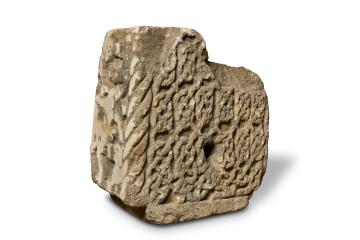
Carved with typically Anglo-Scandinavian interlace, this stone was found reused in the Norman church of St Peters and may indicate an earlier 10th century church.
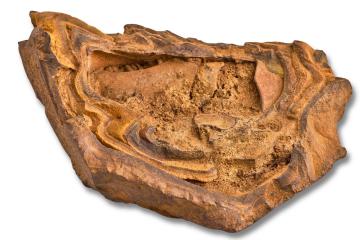
Northamptonshire’s ironstone was formed from iron-rich sediments in the Jurassic period. Quarried since Roman times, ironstone has shaped our landscape, fuelled the county's industry and built our houses.

 © William Edgar, Borough Hill (Daventry) and its History, 1923
 © Skillington Workshop Ltd.
 ©
NMAG
©
NMAG
 ©
NMAG
©
NMAG
 ©
NMAG
©
NMAG
 ©
ARC
©
ARC