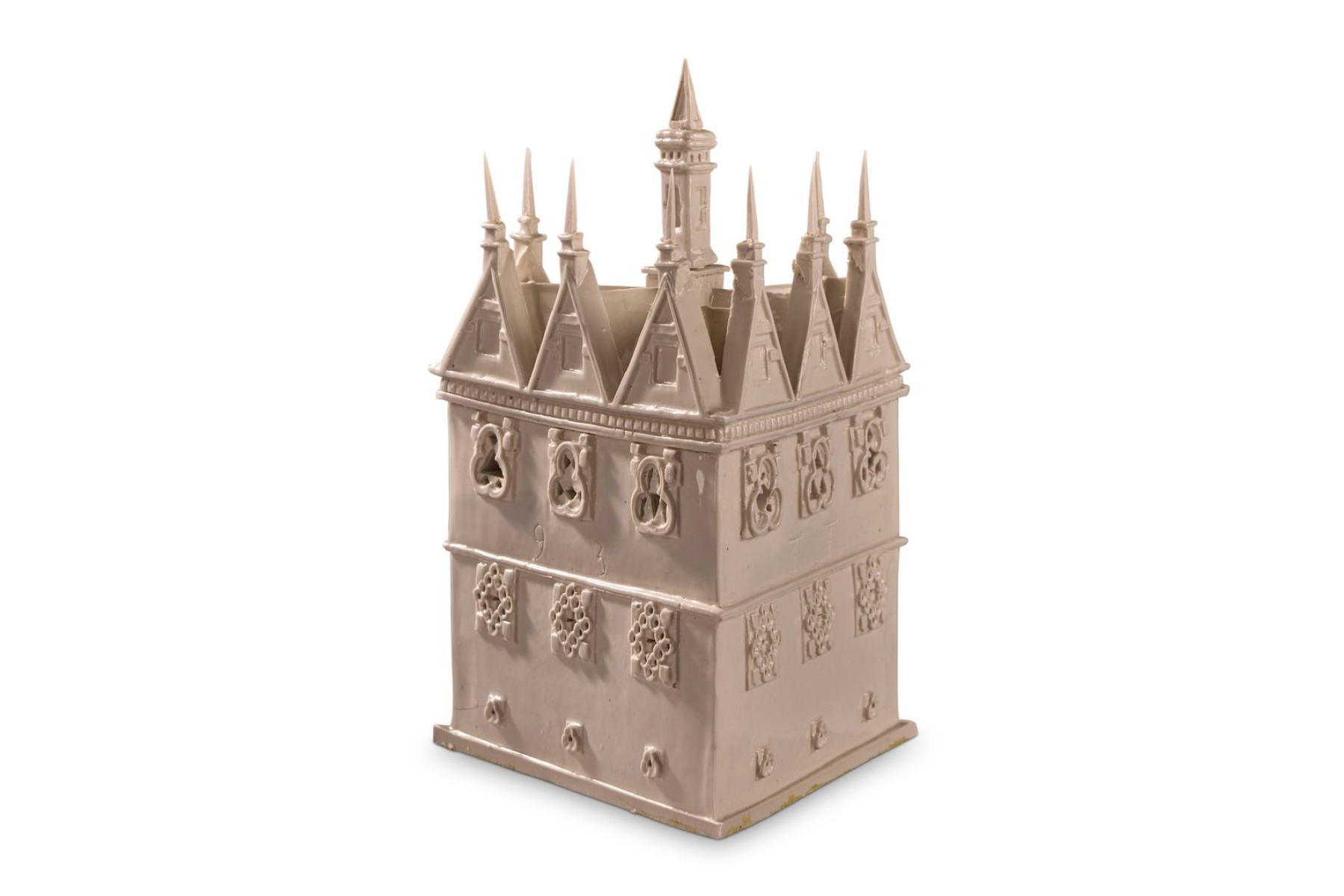
This model was made by British ceramicist Hugh Colvin who began making architectural models in 1980. The fine porcelain clay captures many of the details of Tresham’s Triangular Lodge, which was built between 1593 and 1597.
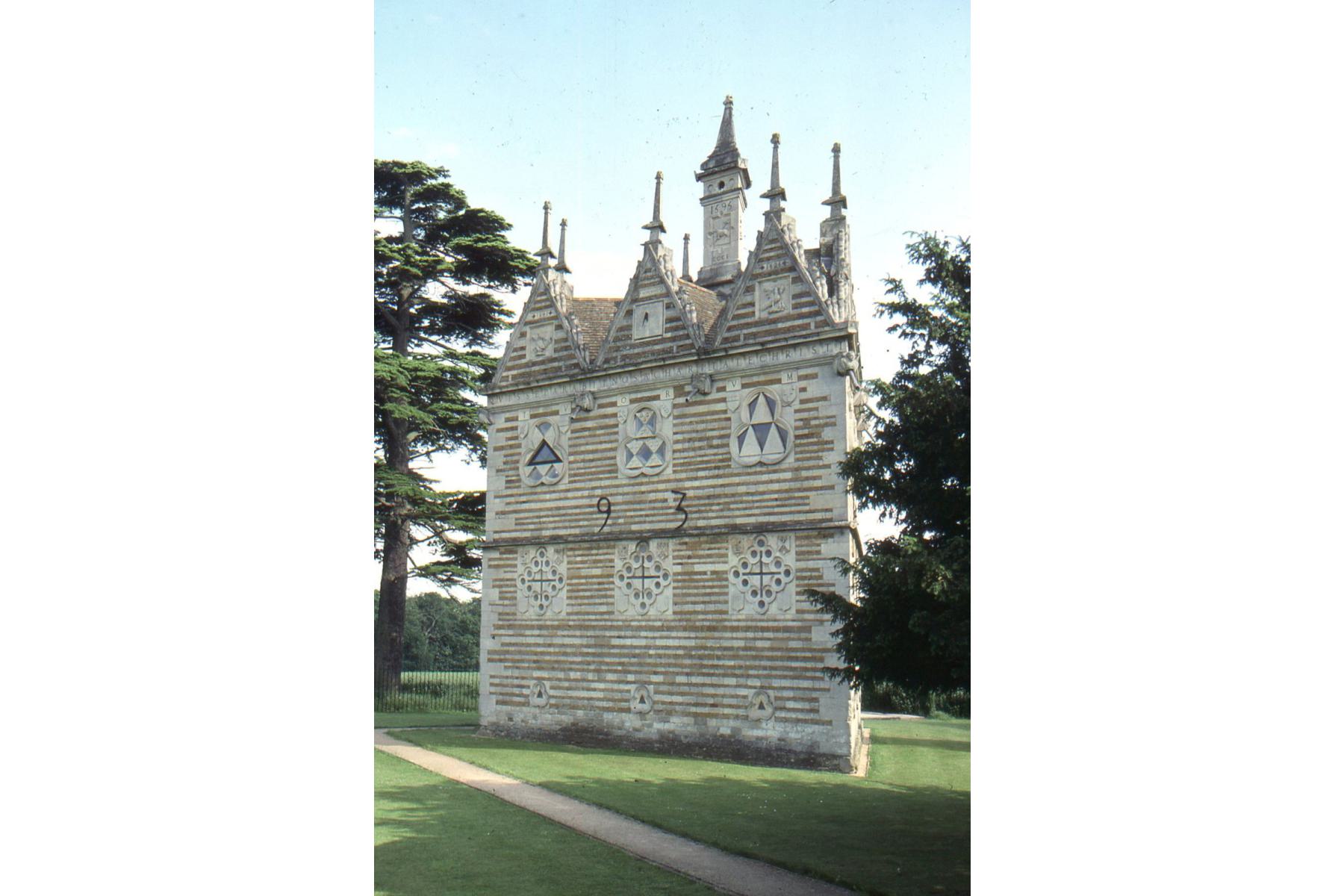
At a time of Catholic persecution, Sir Thomas Tresham spent many years imprisoned for his religious beliefs. Despite this he displayed his beliefs in many of the buildings he had constructed. The Triangular Lodge in Rushton is one of the most intriguing ‘device buildings’, which had secret or oblique meanings, of the Tudor period, with religious symbols that could only have been understood by highly educated aristocrats like himself.
The unique building embodies the number three, representing the Holy Trinity, and is meticulously decorated with religious symbolism. Tresham left no written explanation of the symbols he included, leaving historians to decode many of the hidden meanings in his design, with several remaining a mystery. The number three is repeated throughout the design, with its triangular shape, three floors, and three windows and gables on each side. Each side measures 33 feet, representing the age at which Christ died. The windows, gables and pinnacles are decorated with trefoils, leaves made of three lobes. As well as religious significance, the number three acted as a play on the name Tresham, an alternative spelling ‘Tresam’ meaning ‘I am three’ in Latin.
Number 51 of the objects selected for the A History of Northamptonshire in 100 Objects exhibition 2025.
2nd image: Rushton Triangular Lodge by Christopher Hilton
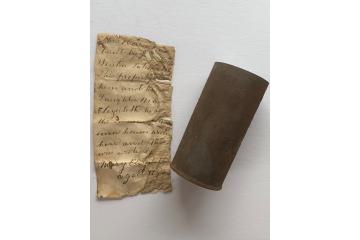
This tin can, 10.8cm tall, diameter 4.9cm, was discovered in the 1960s during the demolition of a row of houses in Burton Latimer called Wallis’s or Maycock’s Yard.

 © NMAG
 © Creative Commons Attribution- Share Alike 2.0 Generic
 ©
NMAG
©
NMAG
 ©
NMAG
©
NMAG