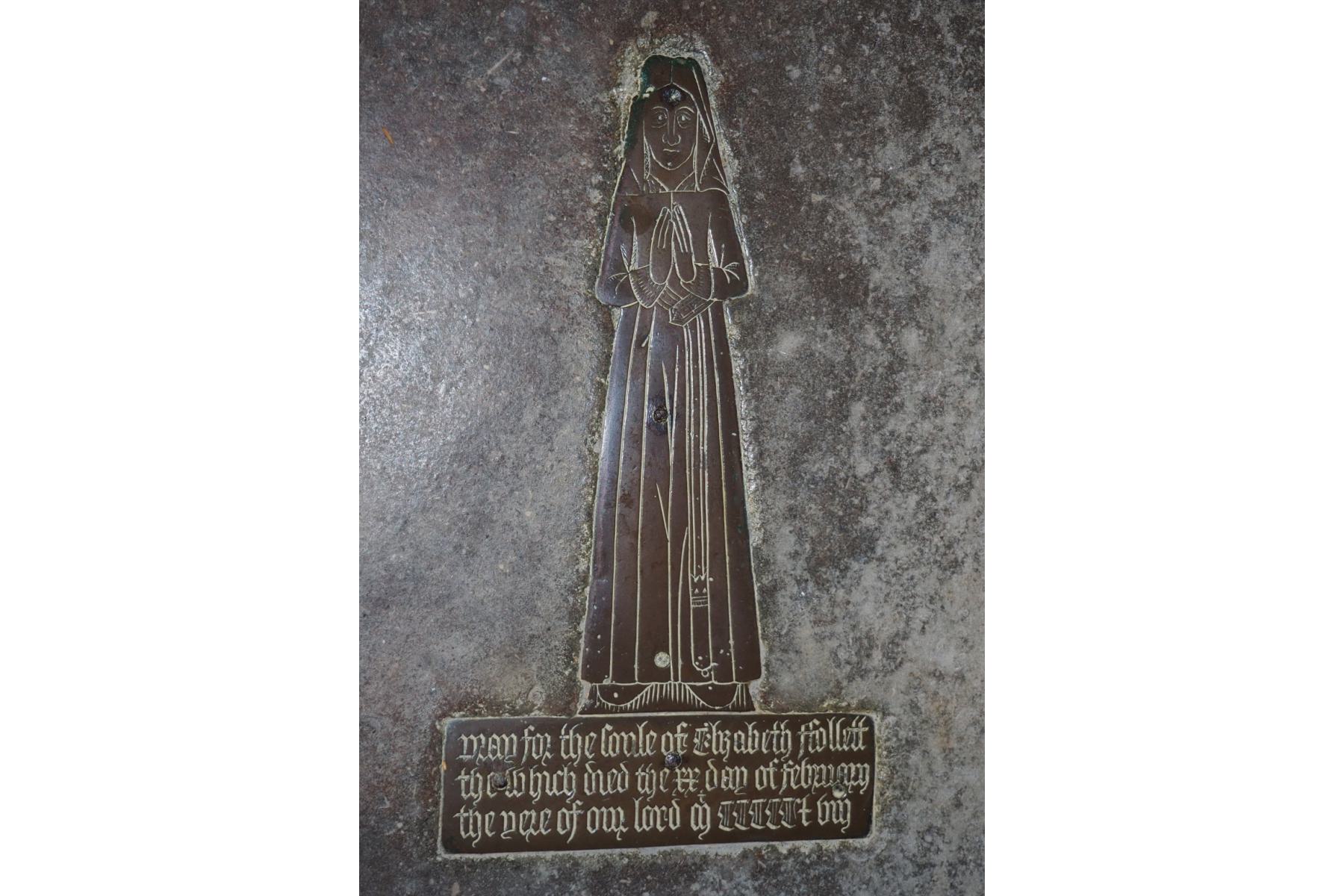
Tomb of young girl, Elizabeth Follet, in Collyweston parish church
1508
Medieval to Tudor
This tomb is believed to be that of a young girl, Elizabeth Follett, thought to be the daughter of John Follett a stonemason in the employ of Lady Margaret Beaufort at her Palace in Collyweston. Elizabeth Follett was buried in February 1508.
Tomb of Elizabeth Follet 1508
The Manor of Collyweston passed into the hands of Lady Margaret Beaufort (Mother of Henry VII) in the Great Grant of 1487 following Henry’s victory at the Battle of Bosworth.She immediately spent a great deal of time and money turning it into a palace which, during the reign of Henry VIII, was said to be ‘neat and fit for a king’.Collyweston became Lady Margaret’s favourite residence.
Henry VIII also stayed in Collyweston on his Northern progress known as the‘Pilgrimage of Grace’.Regrettably the progress did nothing to improve Henry’s displeasure and he developed a profound dislike of the people of Lincolnshire calling them ‘the most brute and beastly of the whole realm.
Collyweston
Contributed by Collyweston Historical and Preservation Society - Sandra Johnson (researcher)
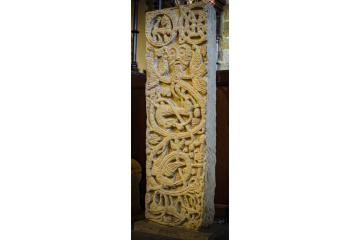
This 12th century grave slab is located in the church of St Peter, Marefair in Northampton. It is thought to have been carved by the same sculptors as the beautifully preserved set of Norman capitals (headings of columns) in the church.

 ©
NMAG
©
NMAG
 ©
Friends of St. Peter's Marefair Northampton by Rafal
©
Friends of St. Peter's Marefair Northampton by Rafal
 ©
NMAG
©
NMAG